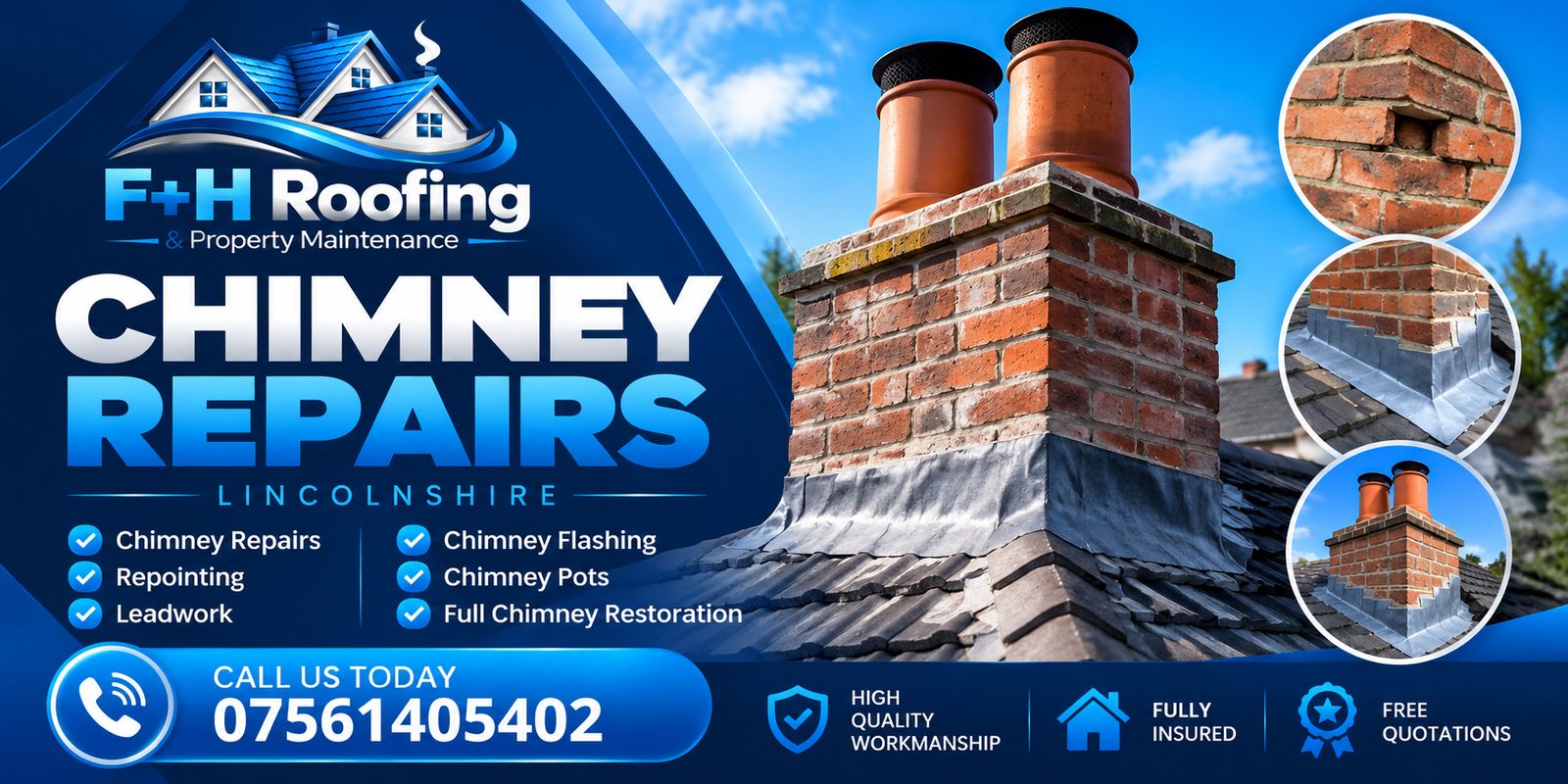
A chimney stands exposed to every storm, so small faults in the pointing, pots or lead grow quickly; we inspect each stack carefully and repair what is needed across Lincolnshire.
Of all the parts of a house, the chimney stack gets the harshest weather. It sits at the highest point, takes wind from every side and is soaked, then frozen, again and again. Mortar crumbles, flaunching cracks, lead lifts and water finds the gaps, often showing first as damp on a chimney breast indoors. Because stacks are hard to see from the ground, many faults go unnoticed for years, until a stain on the ceiling or a fallen piece of brick finally draws attention to the problem.
F H Roofing, based in Beckingham near Lincoln, carries out chimney repairs for homeowners across Lincolnshire. We prefer to start with a proper inspection from the roof, so the quotation covers what the stack truly needs rather than guesswork. You will get a plain explanation of what we found and which jobs are urgent and which can wait. Where a job is outside what we should be advising on, we will say so.
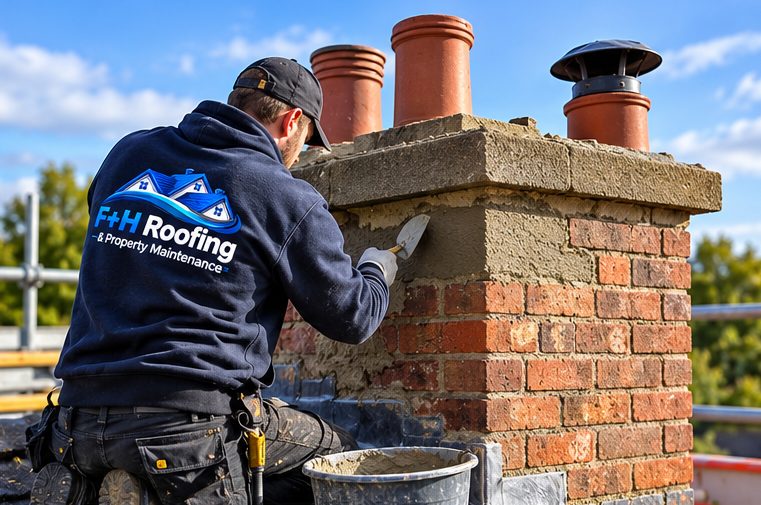
Brickwork on a stack takes a hammering, so repointing is the most common repair we are asked about. Where mortar is recessed or crumbling, we rake it out and repoint to match. If bricks themselves are flaking or cracked, they are cut out and replaced. When a stack leans, bulges or is too weak to repair, the sensible answer may be to take it down to sound masonry and rebuild, or to reduce it to a lower height if the flue is no longer used. We will explain which applies, and we recommend a proper inspection before any decision on a large job.
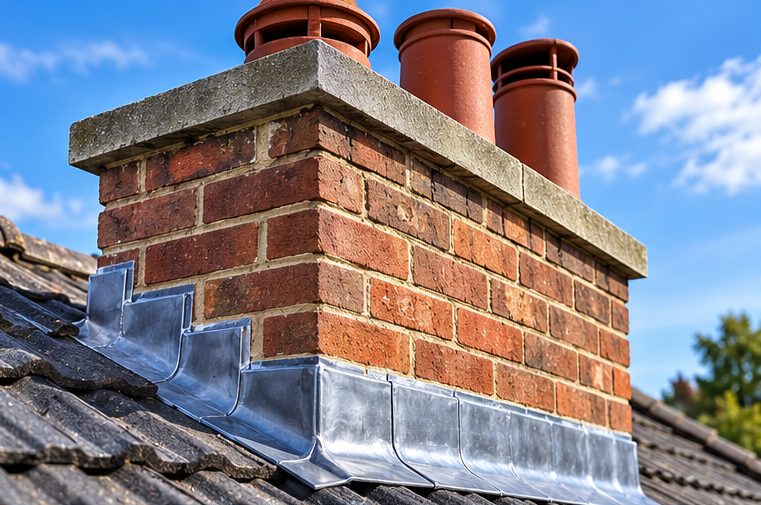
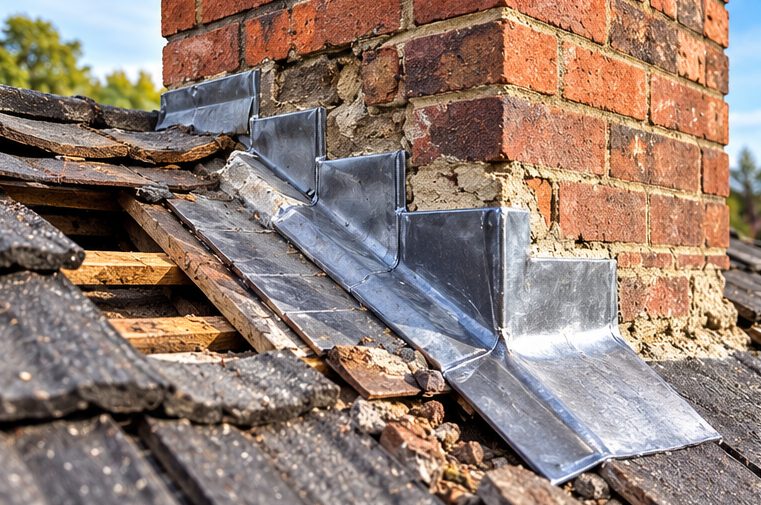
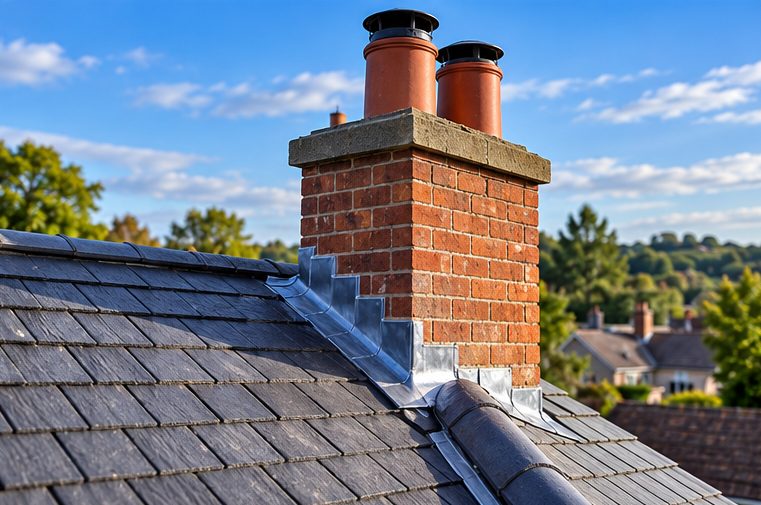
The top of a chimney is where small details matter most. Lead flashing seals the junction between stack and roof, so it needs to be tucked into the brickwork, not stuck on with sealant. Flaunching, the sloping mortar around the pots, throws water away from the flue, and cracks there let rain straight through. Crowns, pots and cowls complete the system. Replacing a cracked pot, renewing flaunching and fitting a cowl where appropriate are modest jobs, yet they often cure leaks that people assume mean a bigger problem further down the building.
Damp on a chimney breast has several possible causes, including failed flashing, porous brickwork, a missing cap or condensation inside the flue. We trace the likely source before recommending anything, because waterproofing a stack without fixing a defect simply hides it. Where a chimney is no longer wanted, removal is possible but involves the stack, the breast and the roof around it, and supports may be needed. We do not claim engineering expertise, so we will tell you if a specialist opinion is sensible before any work begins on site.
Chimney repointing replaces mortar that has weathered away between bricks, since exposed stacks take more wind and rain than any wall in the house. We rake out loose mortar and repoint to match. Chimney brickwork repairs go further where individual bricks are spalled, cracked or loose, replacing them so water cannot soak into the stack and push it out of line.
Read the guide →Chimney stack repairs deal with the combined wear of weather, age and frost, looking at brickwork, pointing, flaunching and flashing together rather than as separate fixes. Chimney restoration is for stacks that have been neglected for a long time and need careful work to bring them back to a sound, tidy condition. We tell you what is repairable and what is not.
Read the guide →Chimney stack rebuilding is needed when a stack leans, the brickwork has failed or the masonry is too weak to repair. We take it down to sound material and rebuild it properly. Chimney stack reductions lower a tall stack, often when it is no longer in use, leaving a neat and watertight finish at roof level. A proper inspection comes first.
Read the guide →Chimney removal can free up space and remove a source of leaks, but it is never a casual job. The stack above the roof, any breast in the rooms below and the roof structure around it all have to be considered, and supports may be needed. We talk through what the work involves, what needs to be made good and why checking the structure first is wise.
Read the guide →Chimney lead flashing repairs are often the answer when a ceiling stain appears beside the stack. Lead that has lifted, split or been sealed with a smear of mastic lets water behind it. Chimney lead flashing replacement means stripping the old material and fitting new lead with proper cover flashings, steps and a secure chase, so the junction stays sealed through all weathers.
Read the guide →Chimney leak repairs begin with finding where the water is entering, which may be the flashing, flaunching, pot, brickwork or even a failed cap. Damp patches on a chimney breast inside can look alike but have different causes. Chimney waterproofing is sometimes added to treated brickwork, though only after defects are fixed, because sealing in a problem helps no one.
Read the guide →Chimney pot replacement is straightforward once the old flaunching has been removed, and it matters when a pot is cracked, leaning or at risk of falling. The new pot is bedded securely on a sound base. Chimney cowls installation adds a cover that helps keep rain, birds and debris out of a flue, and we advise on which suits an open or disused flue.
Read the guide →Chimney flaunching repairs involve the sloped mortar around the base of the pots, which sheds water off the top of the stack. It cracks with frost and age, letting water in. Chimney crown repairs apply to stacks with a cast or rendered cap at the top. Renewing either properly is a modest job that prevents much larger problems later.
Read the guide →Chimney rendering repairs apply to stacks coated in render, which can blow, crack and let water in behind the surface long before it shows indoors. We hack off loose areas, check the brickwork beneath and apply new render in matching texture, with sensible detailing at the top and around the flashing so water runs away rather than in.
Read the guide →Chimney inspections are a sensible first step if you have a stain, loose pot, leaning stack or are simply unsure of its condition. We look closely at the pots, flaunching, brickwork, pointing, flashing and render from the roof, and explain what we see. It gives you a clear idea of what needs doing now and what can wait.
Read the guide →Storm damaged chimney repairs matter because high winds can loosen pots, dislodge cowls, crack flaunching and, in worse cases, shift a whole stack. If you think a chimney has been hit, keep clear of the area beneath it and call us. We make it safe first, then explain the permanent repair and what is involved.
Read the guide →Select your town to see how we handle chimney repairs locally.
Pictures are for illustration purposes only.
“Brand new roof fitted and I couldn’t be happier. Excellent service, fast and efficient Very polite hard working men. Would highly recommend these”
“Excellent job fitting our new flat roof. The workmanship is top-notch and you can tell they take real pride in their work. Communication was great throughout, and they finished ahead of schedule. Would definitely use them again.”
“Very pleased with the guttering work done by F H Roofing. The team arrived on time, worked efficiently, and cleaned up afterwards. Everything works perfectly now — no more leaks or overflow!”
Look for crumbling mortar, leaning or cracked pots, loose or lifted lead, damp stains on a chimney breast and debris falling into the grate. Binoculars from the ground help. If you spot any of these, a proper inspection from the roof will show how serious it is.
The principle is the same, but the exposure is much greater and access is harder. The mortar mix needs to suit the existing brickwork, and the work is done at height with safe access arranged. We assess the condition before suggesting how much needs doing.
It can be, but it is not trivial. The stack above the roof, any chimney breast below and the roof structure around it have to be considered, and supports may be needed. We talk through the work with you and suggest checking the structure first.
It is sensible not to use a flue you suspect is damaged until it has been checked. Cracked pots, loose brickwork or failed linings can be a risk. Have the chimney inspected first, and speak to a suitable flue specialist about the liner itself.
F H Roofing Lincolnshire, 3 Popular Meadows, Sleaford Road, Beckingham, Lincoln, LN5 0RB
Tell us what you need and we will be in touch.
Prefer to talk? Call 07561 405402 or WhatsApp us.