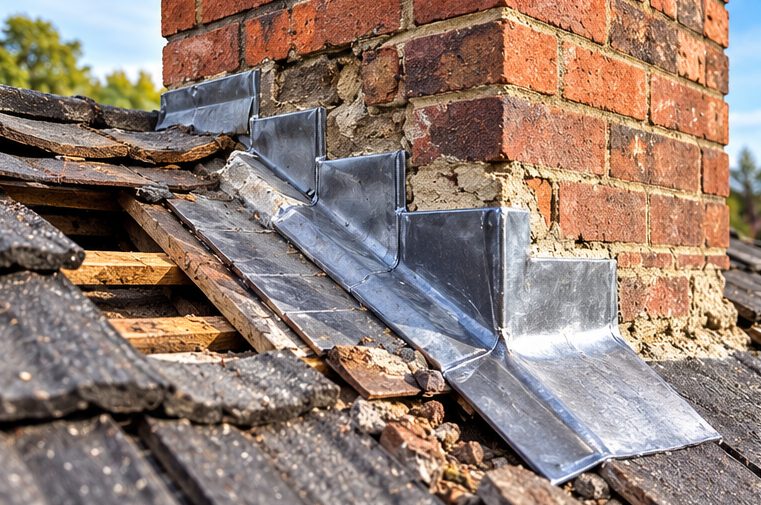
Most chimney problems start small: a crumbling joint, a loose pot, a damp patch on the chimney breast. Many can be put right with repointing or new flaunching. Some cannot. When the brickwork has moved, the bricks themselves are flaking apart, or the stack leans, patching only buys a little time and can hide a bigger problem.
That is where chimney stack rebuilding and chimney stack reductions come in. Both involve taking brickwork down, but for different reasons and with different results. This guide explains how to tell which one suits your house, what the work involves, what shapes the quote, and what to ask before anyone starts taking bricks off your roof in Lincolnshire.
A chimney lives in a harsh spot. It is the most exposed part of the house, wetted by rain on every side and dried by wind, and in open Lincolnshire country that exposure can be considerable. Over time the mortar softens, bricks take in water, and frost does the rest. You can often spot trouble from the garden or with binoculars, without climbing anything. Look for the following warning signs and do not ignore them, because a stack that fails can drop heavy material onto the roof, the garden or a neighbour's property.
Chimney stack rebuilding means taking down the unsound part of the stack, often from just above the roofline, and building it up again. Where the bricks are sound, they can usually be cleaned and reused, so the finished stack matches the rest of the house. Where they are not, matching replacements are sourced. A rebuilt stack is laid in fresh mortar, with the pots bedded back on a new crown, and the lead flashings around its base checked or renewed at the same time. Rebuilding is the right answer when the damage is widespread, when the structure is leaning, or when previous repairs keep failing. It keeps the original look of the house, which matters on older Lincolnshire properties and on terraces where neighbouring stacks should still look like a pair. A proper inspection comes first, so the extent of the work is agreed before it begins.
Chimney stack reductions mean lowering the height of a stack, usually because it is no longer in use or because a tall, slim stack has become a worry. A reduced stack is capped and sealed so water cannot run down it, and the flue is ventilated so damp does not build up inside. Reducing is often sensible where the fireplace was blocked off long ago, where the top section has deteriorated while the lower brickwork is fine, or where the owner wants to remove the burden of maintaining a tall stack. It is not a casual decision. The stack may be shared with a neighbour, may serve other flues, or may be part of the character of the street. If you still use any flue in the stack, or might in future, say so early. Reduction and full removal are different jobs, and your roofer should explain both.
The choice usually comes down to condition, use and appearance. If the stack is sound but tired, repointing and new flaunching may be all it needs. If it is unsound but you want to keep the look and use the flue, rebuilding is the honest route. If the fireplace is redundant and the upper stack is poor, a reduction can make sense, with the roof tidied afterwards. Ask whoever inspects it to show you the problem areas, in photographs if possible, and to explain why a lesser repair would not hold. Be cautious of anyone who recommends demolition without showing you the evidence. We describe the repairs we carry out, but we do not claim to be structural engineers. If a stack looks seriously unstable, or a wall below it is cracking, it is sensible to involve a structural professional as well.
Chimney work is quoted individually because every stack is different. The main factors are how much of the stack has to come down, the size and number of pots and flues, and how the bricks can be reused or matched. Access is a big one: a stack on a steep roof, or one at the back of a tall house, may need scaffolding or a protected working platform, and that is a real part of the job rather than an extra. Lead flashings, new flaunching and any pot or cowl replacement add to the scope. Whether the roof tiles around the stack need to be lifted and relaid also matters. A good quotation lists these items clearly, so you can compare like with like. It should also say how the roof will be protected while the stack is open, and who clears away the waste.
If you are in Lincoln, Sleaford, Boston, Grantham or elsewhere in Lincolnshire and your chimney is causing you concern, getting in touch costs nothing. We offer free quotations, and for chimney work we recommend a proper inspection of the stack, the flashings and the roof around it before any decision is made. Have a few things ready: roughly when the problem started, whether any flue is still in use, and any photographs you have taken from the ground or from an upstairs window. Tell us if you have noticed damp indoors. Do not climb onto the roof yourself to take a closer look. We will explain what we find in plain terms, set out whether rebuilding, a reduction or a smaller repair looks sensible, and leave the decision with you.
For chimney stack rebuilding and reductions anywhere in Lincolnshire, call or WhatsApp 07561 405402, or use the form below and tell us about the job.
Pictures are for illustration purposes only.
See all Chimney Repairs services in Lincolnshire →
No. Repointing renews the mortar joints in a sound stack. Rebuilding takes the brickwork down and builds it again, which is needed when the bricks have moved, split or crumbled. An inspection will show which one your chimney needs, and whether repointing would simply be temporary.
Only if the flue you use can still work properly afterwards, and that needs careful thought. A lowered stack can affect how a fire or boiler draws. Tell us which flues you use, so the options can be explained before any decision is made.
Most stack work is carried out from the roof, so the main disturbance is outside. If the flue is open, some soot and dust can fall, so rooms below are normally protected. Please tell us about any fireplaces so we can plan for them.
Tell us about the job and we will be in touch.
Prefer to talk? Call 07561 405402 or WhatsApp us.