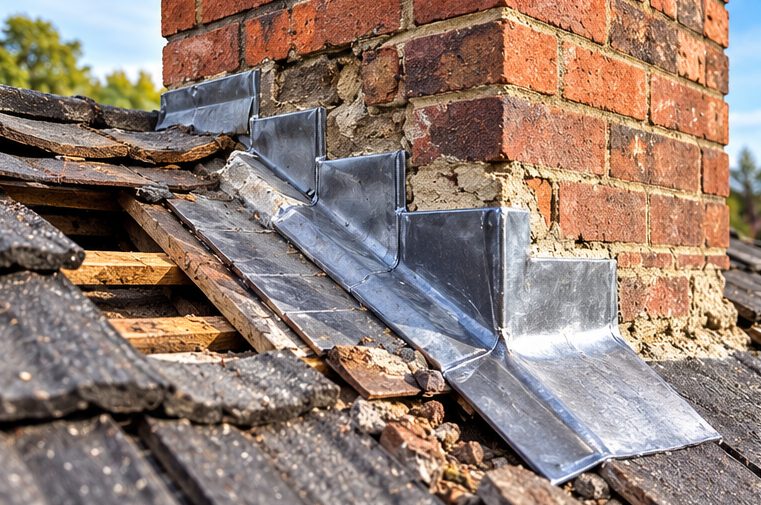
The pots on top of a stack are easy to forget because you rarely see them up close. From the garden they look like small clay or concrete tubes, yet they carry smoke away, keep rain out of the flue and hold the top of the stack together. When one cracks or leans, the damage tends to travel downwards.
This guide explains how to tell when a pot needs attention, how chimney pot replacement is normally approached, and where a cowl helps. It is written for homeowners across Lincolnshire, from Lincoln to Boston, who want to understand the job before anyone comes out to look at it.
Most pots fail slowly. Frost gets into small cracks, the water freezes and expands, and the surface starts to flake. Look at the stack through binoculars on a dry day, or check the lawn and driveway for orange or grey fragments after a windy night. A pot that leans, has a visible split along its length, or sits loose in its mortar bed needs attention soon. Soot or damp staining on the chimney breast inside the house can also point to a pot that is letting in rain. Never climb up to check it yourself. Pots are heavy, the stack may be weaker than it looks, and a fall from a pitched roof is the real danger. A ground-level look, and photos taken with a zoom lens, are enough to decide whether to book an inspection.
Chimney pot replacement starts with safe access, usually scaffolding or a properly secured tower, because the work is done at the very top of the stack. The old pot is lifted off, the mortar bed beneath it is checked, and any loose or crumbling material is cleared. A new pot is then bedded in fresh mortar so it sits level and the flue lining lines up with it. The surrounding flaunching, which is the sloped mortar collar that sheds water, is often renewed at the same time because disturbing the pot tends to crack it. If the brickwork underneath is weak, that is a different and larger repair, and it is better to know that before the new pot goes on. A proper inspection will tell you which of these situations applies.
Pots come in different heights, diameters and profiles, and the traditional look of your house matters here. Matching an older terracotta style often looks better than a plain modern replacement, but the key question is whether the chimney is in use. A working flue needs a pot that suits the appliance below it. An unused flue is a different case and needs ventilation so damp does not build up inside. This is where chimney cowls installation comes in. A cowl is a cap that fits over or into the pot to stop rain, birds and debris entering, and some designs also help with downdraught in exposed positions. Ask us whether a cowl suits your property and the way you use the fireplace, because the wrong type can restrict a flue that needs to breathe.
A few errors turn up again and again. Capping an unused flue completely with no ventilation can trap moisture and stain the breast. Fitting a pot onto a tired flaunching means the new pot soon sits in a cracking bed. Choosing a cowl that does not match the appliance can cause smoke to spill back into the room. Some people ignore a cracked pot for years because it still looks fine from below. A pot that is partly detached can fall in a gale, so it is worth acting before the weather decides for you. Finally, avoid temporary fixes such as filling gaps with general-purpose sealant. Mortar and a correctly seated pot are the proper repair, and an honest inspection will show what the stack actually needs.
No two stacks are the same, so the quote depends on what we find. The main drivers are access, since scaffolding or a tower is a large part of the effort on taller houses, and the number of pots on the stack. Terraced and semi-detached houses often share a stack with several pots. The condition of the flaunching, the mortar bed and the brickwork below the pot changes the scope. The type of pot or cowl you choose matters too, as do any extra repairs found once we are up there. We can usually describe the likely scope after seeing photos, but a site visit is the reliable way to give a fixed quotation. Ask what is included, and whether any extra work is likely.
F H Roofing is based in Beckingham near Lincoln and covers Lincolnshire, including Sleaford, Grantham and Louth. For a free quotation, use the phone or WhatsApp buttons on this page and tell us a little about the stack: roughly how high it is, how many pots it carries, whether the fireplace is in use, and what you have noticed. Photos taken from the ground are very helpful. We will talk through whether the job is a simple pot swap, a pot and flaunching repair, or something that needs a wider look at the brickwork, and what a cowl could do for you. There is no pressure to book, and you will get a clear explanation of what the work involves.
For chimney pot replacement and cowls anywhere in Lincolnshire, call or WhatsApp 07561 405402, or use the form below and tell us about the job.
Pictures are for illustration purposes only.
See all Chimney Repairs services in Lincolnshire →
It is not a sensible do-it-yourself job. Pots are heavy, the work is at the very top of the stack and roof access is risky. The mortar bed and flue alignment also need to be right. A proper inspection and safe working platform make the job far safer and tidier.
No. A cowl is useful in some situations, such as an unused flue that needs rain protection with ventilation, or a spot with downdraught problems. A working flue may need a different design or none at all. Ask us whether a cowl suits your property before deciding.
It depends on access, weather and the condition of the stack. A straightforward pot swap is often a short job once access is in place, but repairs to flaunching or brickwork add time. We will explain what to expect when we have seen the stack.
Tell us about the job and we will be in touch.
Prefer to talk? Call 07561 405402 or WhatsApp us.