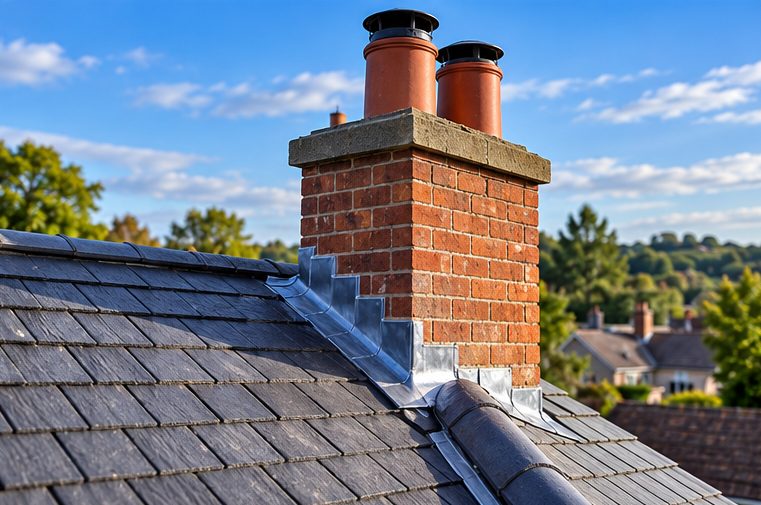
A chimney that no longer serves a fire or boiler can start to feel like a liability. It takes up space in the loft and the rooms below, and it is one more thing that can let water into the house if the stack, flashing or flaunching is tired. That is why many owners start asking about chimney removal.
It is rarely as simple as knocking a stack down. The work runs from the roof, through the loft and sometimes down into the living space, and each stage affects the next. This guide explains the options, the choices you will need to make and the checks worth doing before anyone starts taking brickwork apart on your property.
Chimney removal is not one single job. The simplest version takes down only the part above the roofline, the stack, and closes the roof back over. A second option removes the stack and the brickwork through the loft, leaving the breast in the room below. The most involved version takes out the whole chimney breast from the ground floor upward. Each one changes what happens to the structure around it. Take the stack down and the flue is left open below, so the roof must be made weathertight and ventilation addressed. Remove the breast and the weight it carried has to be supported another way. Before deciding, work out why you want it gone: a leak, lost space, a roof renovation, or an unsafe stack all lead to different answers.
Start with an honest look at the chimney, because its condition shapes the plan. A leaning stack, loose bricks or crumbling mortar can make a partial takedown sensible even if you intend to keep the rest. Then find out what the chimney is attached to, and be cautious about assumptions.
On a pitched roof the stack is usually dismantled from the top, working down in controlled sections, with scaffolding or other safe access in place. Debris should be lowered or chuted away, not dropped. Once the stack is gone, the real roofing work begins. The gap in the roof has to be rebuilt to match the surrounding covering, with new battens, felt or membrane, tiles or slates cut in neatly, and lead or other flashing where the old chimney met the pitch. Sloppy infill is the most common reason a removal turns into a leak, so ask exactly how the opening will be closed and what the finished roof will look like beside the old tiles.
If you remove a stack but keep part of the flue below, that remaining flue should not be sealed completely. Air movement helps stop damp building up inside old brickwork, so a capped and ventilated flue is usual where chimney work stops at the loft or the room. Ask how the flue will be treated at the point it ends. Where the breast is removed too, the plaster, flooring and decoration below will need making good, and that is often separate from the roofing contractor's scope. Agree in advance who is doing what, so no one assumes the other has it covered.
Two chimney removals can look similar from the garden and still need very different amounts of work. The main drivers are how tall and how heavy the stack is, how it is reached, how steep and awkward the roof is, and whether scaffolding is needed. A shared chimney, or one supporting loft timbers, adds planning. The type of roof covering matters, since matching slates or old plain tiles can take longer than modern concrete ones. Disposal of rubble, any engineer's input and the making good indoors all count too. A fair quote lists these items clearly, not one vague total, so you can compare like with like.
If you are considering chimney removal, the easiest first step is to ask for a free quotation. We cover Lincolnshire, including areas around Lincoln, Sleaford, Boston and Gainsborough, and we will talk through whether a partial or complete removal fits your situation. Have a few details to hand: the type of roof, whether the chimney is shared, whether any flue is still in use and what is bothering you about it. After a proper inspection we can explain the roof repair that follows and what to ask any other contractor too. Use the call or WhatsApp buttons on this page to get started.
For chimney removal anywhere in Lincolnshire, call or WhatsApp 07561 405402, or use the form below and tell us about the job.
Pictures are for illustration purposes only.
See all Chimney Repairs services in Lincolnshire →
Often yes. Many owners have only the part above the roof taken down, then the roof is rebuilt over the gap. The breast and any flue below stay in place, usually ventilated. It depends on the condition of the stack, what the breast supports and whether the chimney is shared.
It depends on the property and the extent of the work. Listed buildings and homes in conservation areas have extra controls, and removing a breast may involve building control. Check with your local authority before work starts, and ask your contractor what they expect to be needed.
Removal can end problems that come from the stack, its flashing or the flaunching, but only if the roof is closed properly afterwards. Leaks can have other sources, so a proper roof inspection is wise first, to confirm where the water is really getting in.
Tell us about the job and we will be in touch.
Prefer to talk? Call 07561 405402 or WhatsApp us.