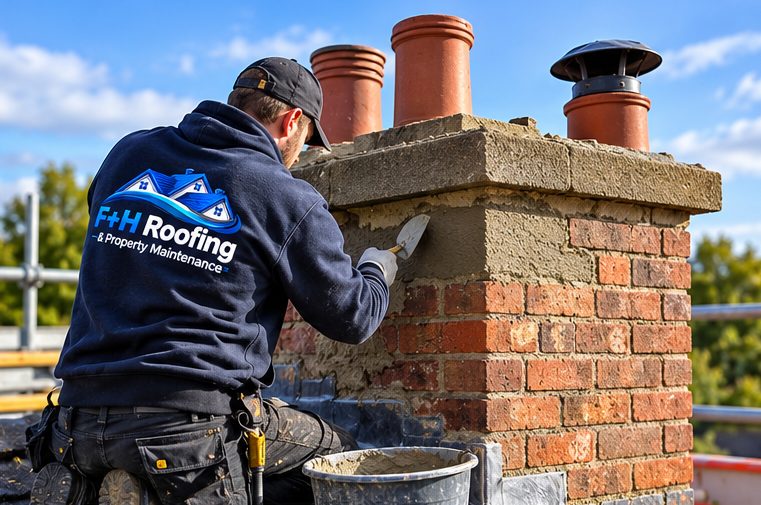
A brown stain on a chimney breast, damp wallpaper in a bedroom corner or a musty smell in the loft will often point towards the chimney. The trouble is that water rarely shows itself where it gets in. It runs along timbers, soaks into brick and surfaces somewhere else entirely, so the first job is working out the route.
This guide explains how chimney leaks usually start, what Chimney Leak Repairs tend to involve and where Chimney Waterproofing fits in. It is written for Lincolnshire homeowners who want to understand the problem before anyone climbs a ladder, whether the house is in Lincoln, Louth or a village between.
Most chimney leaks start in one of a few places, and a sensible inspection works through them in order. The top of the stack takes the worst weather, so the crown or flaunching, which is the mortar bed holding the pots, is the first suspect. Cracks there let rain straight into the flue and the brickwork below. Next come the joints between the bricks, which weather and crumble over time. Lower down, the junction where the stack meets the roof is sealed with flashing, usually lead, and a lifted edge or a failed mortar fillet is a very common culprit. Finally, an unused flue that is open at the top simply collects rain. Condensation and salts from old soot can also darken the breast without any roof fault at all, so a stain alone does not prove a leak.
The repair follows the cause. Once the source is found, the work is normally a combination of small, targeted jobs rather than one big one.
Chimney Waterproofing generally means applying a breathable, water-repellent treatment to the brickwork once the faults above are dealt with. The word breathable matters. Masonry has to release moisture as well as shed it, and a coating that seals the surface can trap water behind it and make spalling and frost damage worse. That is a real risk on exposed Lincolnshire stacks, which stand up in open, windy country. Treatment is better seen as the finishing step, not a cure. It will not close a gap in a crown or a lifted flashing, and putting it over failing mortar only hides the problem for a while. A proper inspection should tell you whether the brickwork is sound enough to benefit.
Chimney work varies a great deal, so any honest quote starts with a look at the stack. Access is the biggest factor, because a tall stack on a steep slope may need scaffolding or a tower, while a low one may be reached from a roof ladder. The number of faults counts too, as a single failed flashing is a much smaller job than a stack needing crown, joints and several bricks. The condition of the brickwork decides whether repair is sensible or rebuilding is better value. Whether the flue is in use, and so needs a pot or cowl that works with it, also matters. Be wary of any figure given without anyone going up to look, because chimneys hide problems that a ground-level glance cannot see.
Contact F H Roofing and ask for a free quotation on the chimney. It helps to say where the stain or damp appears inside, whether it gets worse after wind-driven rain, and whether the fireplace is used. Photos of the stack from the garden and of any internal staining are useful, though a proper visit is what settles the diagnosis. We cover Lincolnshire, so tell us the town or village and we will arrange a time. If water is coming in right now, say so, as the business also offers a 24-hour emergency call-out service. Ask what is proposed, what is only optional and whether any temporary protection is needed before the full repair goes ahead.
For chimney leak repairs and waterproofing anywhere in Lincolnshire, call or WhatsApp 07561 405402, or use the form below and tell us about the job.
Pictures are for illustration purposes only.
See all Chimney Repairs services in Lincolnshire →
Stains that sit on or near the chimney breast, worsen after heavy rain and appear alongside a damp loft or stack are good clues. Condensation, plumbing and gutters can look similar, so an inspection of the roof, stack and loft is the reliable way to be sure.
It is not advisable. Non-breathable coatings can trap moisture inside the brick and speed up frost damage, and they do nothing for cracked crowns or failed flashing. Working at height on a stack is also risky. Have the faults repaired first, then ask about a breathable treatment.
Not always, but water getting into ceilings, electrics or timbers should not wait long. If it is actively pouring in, temporary protection may be sensible before the proper repair. F H Roofing offers a 24-hour emergency call-out service, though arrival times cannot be promised.
Tell us about the job and we will be in touch.
Prefer to talk? Call 07561 405402 or WhatsApp us.