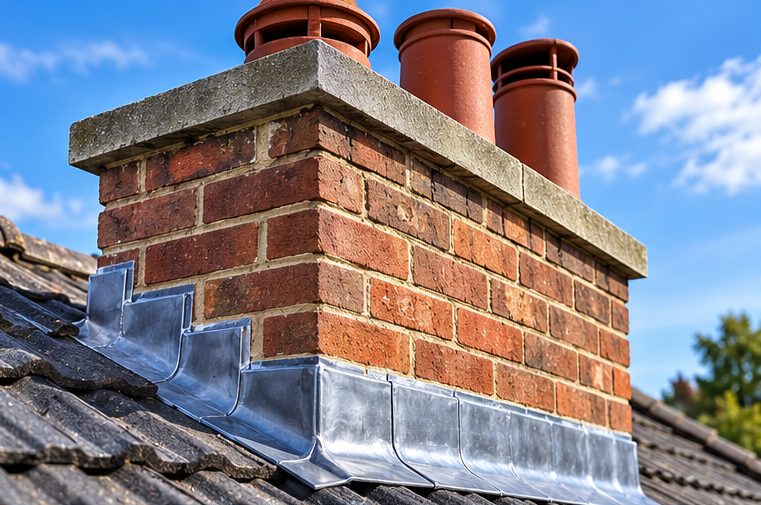
Render on a chimney stack has a hard life. It sits at the highest, most exposed point of the house, with wind, driving rain and frost working on it from every direction, and most people only notice it when a lump lands on the lawn. A sound coat sheds water and shields the brickwork behind it. A cracked or hollow one does the opposite and lets moisture creep in.
This guide covers how render fails, what a typical repair involves, and how to judge whether patching will do or a larger job is needed. It is written for homeowners across Lincolnshire, from Lincoln to Skegness, where open country gives chimneys very little shelter. We describe repairs in general terms and always recommend a proper inspection before anything is decided.
Render is a hard cement-based coat, and it is only as good as the bond to the masonry behind it. Over time, water finds hairline cracks, soaks in, then freezes and expands, which pushes the coat away from the brick. Weak mixes, thin coats and render applied over damp or dusty brickwork tend to fail sooner. Failed flashings or a damaged top of the stack feed water into the structure from above, and render softens and blows from behind. That is why a good chimney rendering repair looks at the cause of the damp, not just the visible patch. Fixing the surface while water still enters means the same cracks usually return.
You do not need to climb anything to spot trouble. A pair of binoculars on a dry day will show most of these.
A small, isolated area of failed render over otherwise sound masonry can often be cut back to a firm edge and made good. Matching the surrounding texture and colour takes care, and a patch will often remain visible once weathered. If hollow areas are widespread, the coat is cracking in many places, or the brickwork behind is soft, a full re-render of the stack is usually the more sensible route, since patching a tired coat only moves the weak spot along. Occasionally the render is hiding brickwork that needs repointing or rebuilding. We cannot judge that without getting close, so we recommend an inspection rather than guessing, and we will tell you plainly if a patch is not worth doing.
Work on a chimney normally means safe access, so scaffolding or a tower is often needed, particularly for taller stacks, and it is one reason a quick look from a ladder is rarely enough. The loose and hollow render is taken off back to firm material. Brickwork is checked, any defects dealt with, and flashings and the top of the stack are looked at, because they decide whether water keeps getting in. A bonding or dubbing coat may be applied before the finished coats go on, and the render needs time to cure properly. Weather matters: wet, frosty or very hot conditions can ruin a fresh coat, so jobs depend on a suitable spell.
Chimney rendering repairs vary a lot, so any honest quote starts with a look at the stack. The main drivers are the height and number of stacks, the size of the damaged area, and whether access means scaffolding. The condition of the brickwork underneath matters too, as do any flashing or top-of-stack repairs found along the way. A small patch on a low stack is a very different job to re-rendering a tall, shared stack on a terrace. Finishes also differ, such as smooth, textured or painted, and matching an existing look takes time. A written quote that lists what is included lets you compare like with like.
We are based in Beckingham near Lincoln and work across Lincolnshire. To get a quotation, tell us roughly where the damage is, how tall the stack is, and whether you have noticed damp indoors. Photos taken from a safe spot on the ground help us understand the problem, though we will normally want to inspect the stack before confirming a repair. Quotations are free, and we will explain in plain terms what we found, what needs doing now and what can wait. Use the call or WhatsApp buttons on this page, or send us a message through the website.
For chimney rendering repairs anywhere in Lincolnshire, call or WhatsApp 07561 405402, or use the form below and tell us about the job.
Pictures are for illustration purposes only.
See all Chimney Repairs services in Lincolnshire →
Painting hides cracks for a short time but does not stop water getting in. Moisture tends to push the paint off again as the coat keeps moving. It is better to find out why the render is cracking and repair it first, then decorate afterwards if you want a particular colour.
It depends on the state of the brickwork, how well the cause of the damp is dealt with and how exposed your chimney is. A repair that fixes the water entry and uses a proper mix can last for many years. A surface patch over damp brick may not.
Hollow or cracked render can fall without warning, onto a path, a conservatory or a person. If you see pieces coming away, keep clear of the area below and have the stack looked at. It is also worth checking nearby gutters and roof for debris.
Tell us about the job and we will be in touch.
Prefer to talk? Call 07561 405402 or WhatsApp us.