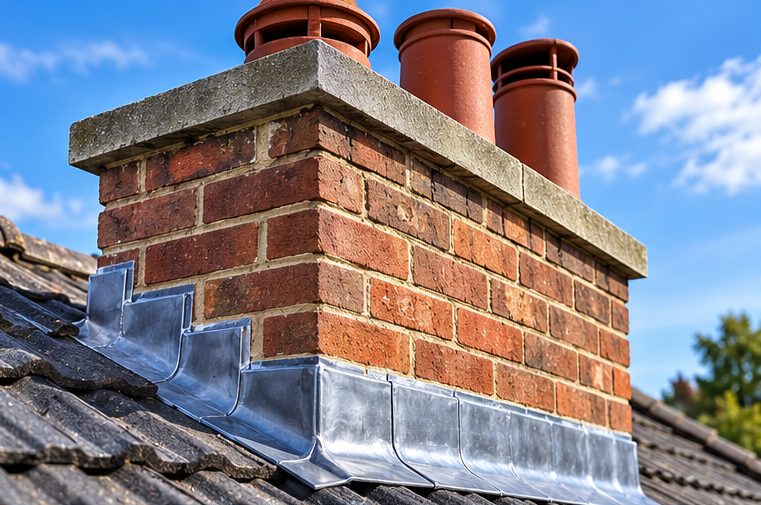
A chimney stack takes more weather than any other part of the house. It stands proud of the roof, catches the wind from every direction and is soaked by rain on all faces. Over time the mortar between the bricks erodes, and that is usually the first thing to go wrong. Chimney repointing is the job that renews those joints before small gaps turn into larger problems.
Many owners only look at their stack from the garden, which makes it hard to judge. This guide explains what repointing involves, how it differs from wider chimney brickwork repairs, what to watch for and what shapes the quote. It is general advice for Lincolnshire homes; a proper inspection of your own stack is always the sensible first step.
Mortar is designed to be the sacrificial part of a brick wall. It is softer than the brick and wears away first, which is how the wall sheds movement and moisture. On a chimney stack that wear is faster because the masonry is exposed on every side. Rain driven by wind from the open Lincolnshire countryside, frost that expands water inside the joints, and the acidic residue from flue gases all work on the mortar. Once the joints recess, water finds its way into the brick faces and the core of the stack. Bricks then start to flake, and in cold spells whole faces can spall. Catching the problem at the joint stage is far less disruptive than waiting until the bricks themselves have given up.
You do not need to climb up to spot the early warnings. Binoculars from the garden and a look at what has landed below can tell you a lot. Watch for these:
Repointing is not a smear of new mortar over old. The tired mortar is raked out by hand or with careful tools to a sensible depth, the joints are brushed clean and dampened, and fresh mortar is packed in and finished to suit the original style. The mix matters: it should be compatible with the existing bricks, so older soft brick generally calls for a different approach from modern hard brick. A mortar that is too strong can trap moisture and damage the bricks around it. Work is done from scaffolding or a safe access system, because a stack cannot be repointed properly from a ladder. A neat result on a stack is as much about preparation and access as it is about the mortar itself.
Chimney brickwork repairs cover the cases where the joints are only part of the story. Individual bricks that have lost their faces can be cut out and replaced with suitable matches. Cracked sections may need rebuilding course by course. The top of the stack, including the flaunching around the pots and the flashing where the chimney meets the roof, is often involved because water entering there is a common reason the brickwork below deteriorates. If a stack leans or the damage is deep, we will say so plainly and talk through the options, which can include partial rebuilding. We are roofers rather than structural engineers, so where a stack looks seriously unsound we will explain what we can see and what a closer inspection should cover.
Every stack is different, so a sensible quote follows a visit rather than a guess from a photo. The main factors are:
F H Roofing is based in Beckingham near Lincoln and covers Lincolnshire, including areas around Lincoln, Sleaford, Grantham and Gainsborough. To get a free quotation, tell us what you can see from the ground: loose mortar, flaking bricks, staining indoors or anything that has fallen. We will arrange to look at the stack properly, explain what is repointing and what is wider repair, and put the details in writing so you can compare. If anything is unsafe, such as bricks threatening to fall onto a path, say so when you get in touch.
For chimney repointing and brickwork repairs anywhere in Lincolnshire, call or WhatsApp 07561 405402, or use the form below and tell us about the job.
Pictures are for illustration purposes only.
See all Chimney Repairs services in Lincolnshire →
There is no fixed interval. It depends on the mortar, the exposure of the stack and how well the top is protected. A look at the joints every few years from the ground, and after severe weather, will show whether they are still sound or starting to recess.
It is not a good do-it-yourself job. Working at height on a stack needs proper scaffolding, and the wrong mortar or poor raking out can damage the bricks. A professional can also check the pots, flaunching and flashing while up there.
Not always. Repointing renews the joints, but bricks that have lost their faces may need cutting out and replacing. If many are affected, partial rebuilding might be sensible. An inspection will show which approach suits your stack.
Tell us about the job and we will be in touch.
Prefer to talk? Call 07561 405402 or WhatsApp us.