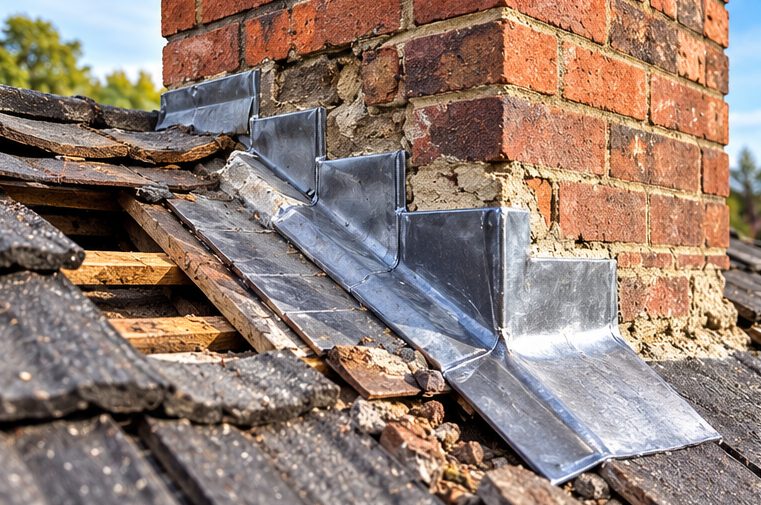
Open, flat Lincolnshire country gives the wind plenty of room to build up, and a chimney stack is one of the most exposed parts of any house. After a rough night you may find pieces of brick or pot on the lawn, a cracked cap, or a stack that looks slightly out of true against the sky. Even a small change can matter, so it pays to look carefully.
This guide explains how Storm Damaged Chimney Repairs are normally approached, what you can safely check from the ground, and what should be left to a roofer. It is general information only. Every stack is different, and nothing replaces a proper look at yours by someone who can get up there safely. Read it alongside any advice from your insurer and your own common sense.
Start from the ground and keep your distance. Look at the stack from a few different angles, ideally with binoculars, and note anything that has shifted, cracked or fallen. Check the garden, the driveway and any conservatory or lean-to roof below for fallen pieces, and keep children and pets away from that area until it is clear. Take photographs of anything you can see. Do not climb a ladder to the roof edge yourself, and do not lean one against a damaged stack. If a stack looks to be leaning or loose, avoid using any fireplace beneath it and think about where it could fall. If there is any chance of it coming down onto a public footpath or a neighbour's property, say so when you call. We run a 24-hour emergency call-out for situations that cannot wait.
Wind rarely causes just one fault. Common findings include cracked or missing chimney pots, a loosened or broken mortar cap on top of the stack, brickwork that has been shaken loose at the upper courses, and lead flashing lifted away from the roof slope. Small faults such as a single cracked pot or a patch of lost mortar can often be repaired in place by repointing and refixing. Where several courses of brick have moved, the usual approach is to take down the loose section and rebuild it, then reinstate the cap and flashing. A stack that has moved at its base or lean noticeably needs a closer look before anyone decides between repair and rebuilding. We describe repairs in general terms here, and we do not give structural engineering opinions. If you want one for a stack that has clearly moved, a structural engineer is the right person to ask.
Damage that is easy to see from the garden is often only part of the story. Wind can open hairline cracks in the mortar that do not show until the next spell of heavy rain, when water starts to find its way into the brickwork and down into the loft or the chimney breast. A close inspection of the stack, the pots, the flashing and the roof around the base lets the repair be planned in one go, instead of coming back to it piece by piece. It also gives you a clear written or photographed record of what was found, which is useful if you need to speak to your insurer. Inspecting means getting access safely, so it usually involves scaffold or a tower or a roof ladder set up properly, depending on the height and the pitch of the roof. Do not be tempted to patch things from the ground with sealant.
If the stack is unsafe or water is getting in, a temporary measure may be sensible before the full repair can be arranged. That might mean fitting a cover over an open pot or exposed flue, supporting or taking down loose masonry, or sheeting over a damaged section of roof. Temporary work is there to keep the weather out and keep people safe, not to stand in for the repair. Inside the house, put a bucket under any drip, move furniture away from a wet chimney breast, and do not light fires in a fireplace connected to a damaged flue. If you have a stove or boiler flue in the same stack, have it checked before it is used again. It is wise to contact your insurer early, keep any fallen pieces if it is safe to pick them up, and keep your photographs together.
No honest roofer can name a figure without seeing the stack, because the work varies so widely. The main factors are how high the stack is and how it can be reached, since a tall stack on a steep roof needs more access equipment than a low one. After that comes the extent of the damage: a repointing job is a different size of task from rebuilding several courses. The number of pots, the condition of the flashing and whether the render or flaunching also needs attention all change the scope. Hidden damage found once the loose brick is removed can add to the work, and a good quote says how that situation will be handled. Weather and the age and type of the brick matter too, because older brick and lime-based mortar may need a matching approach. Ask for the quote to list what is included, so that you can compare like with like.
If your chimney has been hit by a storm, the easiest way to get things moving is to tell us what you can see. Tell us roughly where you are in Lincolnshire, whether the damage is on a house, bungalow or outbuilding, and whether anything has come down. Photographs taken safely from the ground are very useful, and so is a note of any leaks inside. We offer free quotations, and we will talk through what the repair is likely to involve before anyone commits to anything. We cover Lincoln, Boston, Sleaford, Grantham, Louth, Skegness, Spalding, Gainsborough and the areas between them. If the situation is urgent or a stack looks unstable, say so straight away and ask about our 24-hour emergency call-out. Use the call or WhatsApp buttons on this page, or send an enquiry through the contact form.
For storm damaged chimney repairs for homeowners anywhere in Lincolnshire, call or WhatsApp 07561 405402, or use the form below and tell us about the job.
Pictures are for illustration purposes only.
See all Chimney Repairs services in Lincolnshire →
Small jobs such as clearing fallen debris from the garden are fine, but work on the stack itself means working at height beside a possibly weakened structure. That is risky, and poor mortar work can let water in. We would recommend having a roofer inspect and repair it.
It depends on the size of the stack, the access needed and how much is damaged. A small repointing or pot refit is quicker than rebuilding several courses of brick. After looking at the stack we can explain the work involved and the likely duration for your situation.
Yes, until the chimney has been checked. Cracked brickwork, a damaged pot or a loose flue liner can allow smoke or fumes to escape into the wrong places. If you rely on a boiler or stove flue, have it looked at before using it again.
Tell us about the job and we will be in touch.
Prefer to talk? Call 07561 405402 or WhatsApp us.