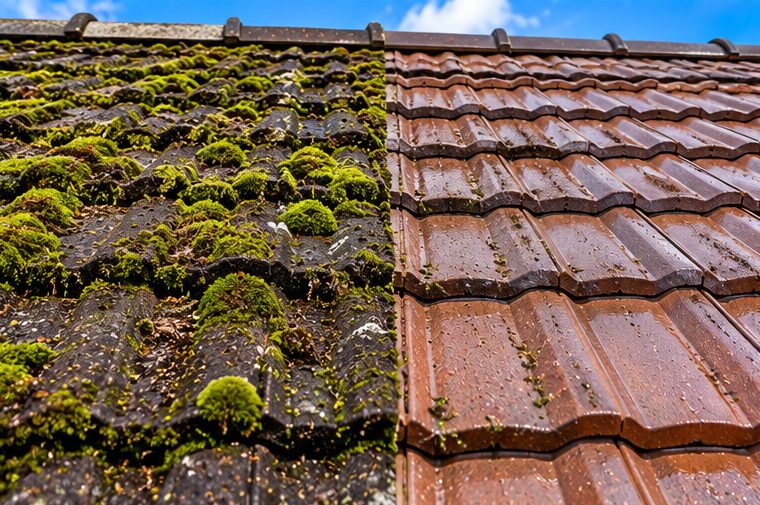
Moss on a roof rarely arrives overnight. It builds slowly in damp, shaded corners, along tile edges and in the valleys where water lingers, until one day you notice a green fur across a whole slope. Because the roof is out of sight, many people leave it longer than they should. Left alone, it holds water against the tiles. It is worth dealing with early.
Manual Roof Moss Removal means taking the growth off by hand, using scrapers and brushes, rather than blasting it away. This guide explains how it works, when it makes sense and what it will and will not achieve, so that you know what to expect before a roofer comes to look at your home in Lincolnshire, and it also covers the questions worth asking.
The roofer works over the roof surface on a safe access setup, which might be a roof ladder, scaffold or a tower, depending on the height and pitch. Loose moss is lifted with a flat scraper, working carefully so that tiles are not chipped or pushed out of place. A stiff brush then clears what remains from the faces and edges of the tiles. Debris is swept down the roof and collected, rather than being left to wash into the gutters, where it would block outlets. Where moss is thick along the ridge or in valleys, it takes more time because it needs to be removed without disturbing the pointing or the lead. Once finished, gutters, downpipes and any flat roofs below should be checked and cleared. Hand work is slower than some methods, but it is controlled and gentle on the surface.
Hand removal suits roofs where the surface is delicate. Older clay and concrete tiles can have a worn coating, and brittle slates can crack if treated roughly, so gentle methods have real advantages. It also suits small areas, patchy growth, porches and extensions, and roofs near neighbouring windows or cars where overspray would be a nuisance. On roofs with heavier or widespread growth, the roofer may suggest a low-pressure or soft-wash treatment as well, to deal with the algae and lichen that scraping cannot lift off. Some roofs combine both: moss removed by hand first, then a treatment to slow regrowth. Which route is sensible depends on the roof material, its condition and how much growth there is. If you are in any doubt, ask for the options to be explained in plain terms.
Taking moss off improves how water runs down the roof and removes weight and trapped damp from the surface. It lets a roofer see the real condition of the tiles, which is often worth knowing. It will not repair cracked tiles, fix failed pointing or replace worn felt, though it may show you that those jobs are needed. Nor will it keep the roof clear indefinitely. Moss comes back faster on shady, north-facing slopes and under overhanging trees, so we cannot promise a moss-free result for any set period. Regular checks and, where suitable, a preventive treatment will slow regrowth. Be wary of anyone who says moss removal will extend the life of a roof by a particular number of years, because that depends on too many things to predict.
Do not climb on the roof yourself to scrape it. Wet moss is slippery, and tiles can be fragile underfoot. Do not use harsh abrasive tools or wire brushes, which damage the surface of concrete tiles and make regrowth easier. Avoid leaving the debris to fall into the gutters, and do not assume the job is done when the green has gone, because the gutters, valleys and any flat roof areas should be cleared too. Check the ridge and hip tiles while access is in place, since cleaning sometimes shows loose mortar. Be careful about the time of year as well: working in icy or very wet conditions is unsafe, so a reputable roofer may postpone the work. Finally, ask what will be done with the waste, so it does not end up all over your garden and drive.
The quote reflects the size and pitch of the roof, how it is accessed, and how heavy the moss growth is. A low bungalow roof can be reached quite simply, while a steep three-storey roof may need scaffold. The roofing material makes a difference, as slate and old clay tiles take more care than modern concrete. Heavy build-up in valleys, behind chimneys and around dormers takes extra time. Whether gutters and downpipes are being cleared at the same time is another factor, along with any treatment applied afterwards. Garden trees close to the house can make the work awkward and speed up regrowth. We can only give a proper figure after seeing the roof, so ask for a written quote that lists exactly what is included.
If you would like us to look at moss on your roof, get in touch and we will arrange a free quotation. It helps to tell us what kind of roof you have, which slopes are worst, and whether the gutters are overflowing. Photographs from the ground are fine. We cover Lincoln, Boston, Sleaford, Grantham, Louth, Skegness, Spalding, Gainsborough and nearby areas, and will talk you through whether hand removal alone is enough or whether a treatment would also be worthwhile. Use the call or WhatsApp buttons on this page, or send the contact form. We will explain the options plainly and put the details in writing, with no obligation to go ahead.
For manual roof moss removal anywhere in Lincolnshire, call or WhatsApp 07561 405402, or use the form below and tell us about the job.
Pictures are for illustration purposes only.
See all Roof Moss Removal services in Lincolnshire →
We would advise against it. Roofs are slippery when damp, and falls from ladders are serious. Walking on tiles can also crack them. A roofer has the access equipment and technique to do the work more safely and with less risk of damage to your roof.
It depends on how shaded and damp the roof is, how close trees are, and the roof material. Some roofs need checking every few years, others more often. A roofer can advise after seeing it, and can suggest a treatment to slow regrowth.
Sometimes, yes. Moss can hide cracked or slipped tiles and loose ridge mortar. Once the roof is clean, these faults are easier to see and can be repaired before they cause leaks. We will tell you what we find. Ask your roofer to point out any problems they find while up there.
Tell us about the job and we will be in touch.
Prefer to talk? Call 07561 405402 or WhatsApp us.