Slate is a hard-looking material, but it is thinner and more brittle than most people expect, and old nail fixings are often the weak point. That is why Slate Roof Moss Removal needs a lighter touch than the same job on a heavy concrete tile. Done well, it clears the growth without chipping edges, lifting slates or driving water behind them. Done badly, it can leave you with more repairs than you started with.
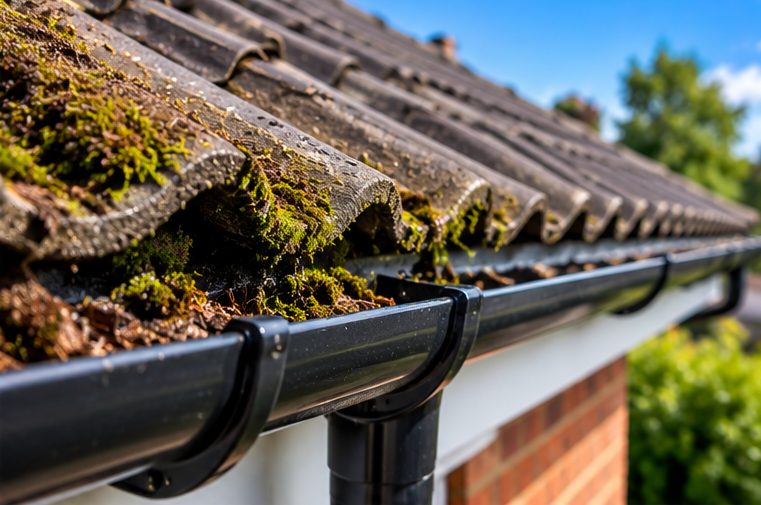
Moss on slate is more than a cosmetic problem. It holds moisture against the surface, can block the small gaps between slates and sits in valleys and gutters where it traps debris. This guide explains how moss gets established, how it is removed safely, what to do afterwards and what shapes the quote for homes in Lincolnshire, where damp spells and shaded gardens give it plenty of chances.
Moss needs damp, shade and a rough foothold. Slate is naturally smooth, so growth often starts where dirt has built up: along the lower courses, around valleys, beneath overhanging branches and on the north-facing slope that dries slowly. Roofs with a shallow pitch hold water for longer and suffer more. Once a cushion forms, it traps more dust and spores and the patch grows outwards. You may also see algae and lichen, which look like dark streaks or grey-green rosettes and respond to the same treatments. A few small patches are usually harmless in the short term. Thick, continuous cover is a different matter, because it keeps slates wet, adds weight and can push into the overlaps.
Manual removal is the usual starting point on slate. A roofer works from a safe, supported position, lifting the moss away with a scraper or stiff brush, working with the lay of the slates so the tails are not lifted. Dry, loose moss comes off more easily than wet growth, so the day and the weather matter. Hand work also lets the roofer see what is underneath. Slipped, cracked or loose slates, rusted fixings and worn pointing show up as the moss comes away, and small repairs can be planned straight away. The drawback is time: heavily covered or steep roofs take longer by hand, and the person on the roof must take great care because slate can be slippery and fragile underfoot. Never walk on it yourself.
After the bulk is scraped off, a soft-wash or low-pressure treatment may be used. This means applying a cleaning solution gently to the surface and letting it work on the roots, spores and stains so they die back over the following weeks, rather than forcing anything off. Rain gradually rinses the residue away. It suits slate because it avoids hard impact on the surface and joints. Some points are worth knowing:
The most common errors are rushing, using the wrong tools and treating the symptom only. Metal scrapers dug under slate edges can crack them. Hard, forceful cleaning can strip the surface, force water under laps and shake loose old fixings. Ladders leant on the edge or gutter can crush the slate or the guttering. Another mistake is ignoring what the moss was hiding: a roof with slipped slates still leaks even when it looks clean. After the work, gutters and downpipes also deserve a look, because a lot of loosened moss ends up there. Finally, think about causes. If an overhanging tree is shading one slope, trimming it will do more for the roof than any treatment.
The quote depends on how much roof there is and how difficult it is to reach. Pitch, height and the type of access needed, from ladders to scaffolding or a tower, change the effort significantly. So does the density of the growth: a light covering is quick, while thick moss across every slope takes much longer. The method chosen, whether hand work only or hand work followed by treatment, and whether gutters, valleys and flat sections are included also shape the price. If the roof is old and brittle, extra care may be needed, and any repairs found will usually be quoted separately so you can decide what to do about them.
Use the phone or WhatsApp buttons on this page to ask for a free quotation. Tell us what the roof is made of if you know, which sides are mossy, and whether trees overhang it. Photos from the ground or an upstairs window are helpful. We are based in Beckingham near Lincoln and cover Lincolnshire, including Lincoln, Boston, Sleaford, Grantham, Louth, Skegness, Spalding and Gainsborough. We will look at the slates before suggesting a method, explain what we would do and why, and let you know about any repairs we think are worth doing at the same time.
For slate roof moss removal anywhere in Lincolnshire, call or WhatsApp 07561 405402, or use the form below and tell us about the job.
Pictures are for illustration purposes only.
See all Roof Moss Removal services in Lincolnshire →
A little is mostly cosmetic. Thick moss is more of a concern because it keeps the slates damp, can block overlaps and clogs gutters when it falls. It can also hide slipped or cracked slates. It is sensible to clear it before it builds up rather than waiting for a leak.
Light brushing from the ground, such as around a low outbuilding, is one thing. Going onto a slate roof is risky for you and for the slates, which can crack under weight. Roofs at height need proper access and fall protection, so we would advise leaving it to a professional.
It depends on shade, trees, pitch and how damp the area is. Treatment slows regrowth but nobody can promise a set time. Keeping gutters clear, trimming branches and having the roof checked every so often will help to keep it in better condition.
Tell us about the job and we will be in touch.
Prefer to talk? Call 07561 405402 or WhatsApp us.