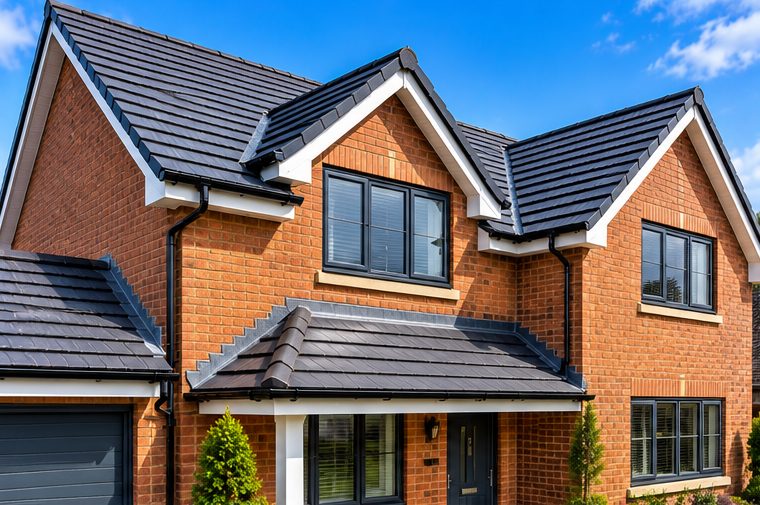
A slate roof is a long-term investment, and the result depends as much on what sits under the slate as on the slate itself. Timber, battens, underlay, fixings and the metalwork around chimneys and windows all have to be right, or the smartest-looking roof will still let water in.
This guide to new slate roof installation is written for Lincolnshire homeowners building a new house, adding an extension or replacing a worn-out covering. It explains how natural slate roofing is planned, what choices you will be asked to make and how to prepare for a free quotation.
Natural slate is a thin, dense stone split into slates and valued for its durability and its clean, flat appearance. It does not rely on a surface coating, so colour tends to stay consistent for a very long time. Slate is also relatively light compared with some concrete tiles, though a whole roof still adds up to a heavy load, which is why the existing structure matters. It suits a range of period and modern homes, and is often specified where planning or local character calls for a traditional look. The trade-off is that slate demands more skill to lay, and it costs more than many alternatives to supply, so it pays to be sure the choice fits your house and your plans.
Before any slate is ordered, the roof timbers need to be looked at. Rafters should be sound, straight and strong enough for the covering. Any rot, woodworm or sagging needs addressing, and the pitch must be suitable for the slate size chosen, as a low pitch calls for a different approach from a steep one. On a new build or extension the structure will be designed with the covering in mind. On a re-roof, we look at the existing timbers once the old covering is stripped and tell you what we find. Hidden defects are the main reason a slate roof job changes mid-way, so it is better to expect a conversation about repairs rather than assume the timbers are perfect.
The unseen layers do much of the work. A breathable membrane lies over the rafters to catch wind-blown moisture and let the roof space ventilate. Treated battens are fixed across the rafters at gauges set by the slate size and pitch, so each course lies correctly. Slates are held by nails or hooks, and the number and type of fixings matters, particularly on exposed roofs. Lincolnshire's open, flat landscape can bring strong winds, so secure fixing is not a detail to skimp on. Eaves details, verges, hips and valleys need correct treatment, and the ridge is bedded or fixed so it stays secure. Ask how each of these will be handled and what material is proposed.
A slate roof is only as watertight as its junctions. Chimneys, abutment walls and dormers need lead flashing and careful soakers or trays so water is carried over the slates. If you want a roof window, such as a Velux, plan its position before the slating starts so it can be built in neatly rather than cut in afterwards. Scaffolding is normally needed for a new roof, both for safe working and for handling heavy materials, and it should be included in the plan and the quote. Think about where slates will be stored, where skips can go and how access to your property will be affected. Good planning at this stage stops delays later.
A new slate roof is priced on the area to be covered, the complexity of the roof shape, and the type and size of slate chosen. Hips, valleys, dormers and chimneys add labour. The amount of timber repair, the underlay and batten specification, and the quantity of lead work all change the scope. Access and scaffolding are significant on taller or awkward houses. Removal and disposal of the old roof is another part of the job when replacing one. Because slate varies in source and finish, we will explain the options rather than give a single figure, and a site visit lets us write a clear, itemised quotation you can compare.
F H Roofing is based in Beckingham near Lincoln and covers Lincolnshire, including Sleaford, Spalding and Skegness. To start the conversation, use the phone or WhatsApp buttons on this page. Tell us whether the roof is new build, extension or replacement, the approximate size, the pitch if you know it and whether there are chimneys or roof windows. If the house is in a conservation area or has a listed status, let us know early so you can check what is allowed. We will visit, talk through the options and send a free written quotation with no pressure.
For new slate roof installation and natural slate roofing anywhere in Lincolnshire, call or WhatsApp 07561 405402, or use the form below and tell us about the job.
Pictures are for illustration purposes only.
See all New Roof Installations services in Lincolnshire →
Properly laid natural slate can last for many decades, often outliving the fixings and flashings used with it. The real limit tends to be nails, lead and timber rather than the slate. Regular inspection helps you catch small problems before they spread.
Almost always. Scaffolding gives a safe working platform and edge protection, and it helps move heavy slates and timber. It also protects walls and windows. We include it in the plan and explain it clearly in the quotation.
Not automatically. The timbers must carry the weight and the pitch has to suit the slate chosen. If you are replacing an older covering, the roof needs checking once it is stripped. We will advise you honestly if strengthening or repairs are required.
Tell us about the job and we will be in touch.
Prefer to talk? Call 07561 405402 or WhatsApp us.