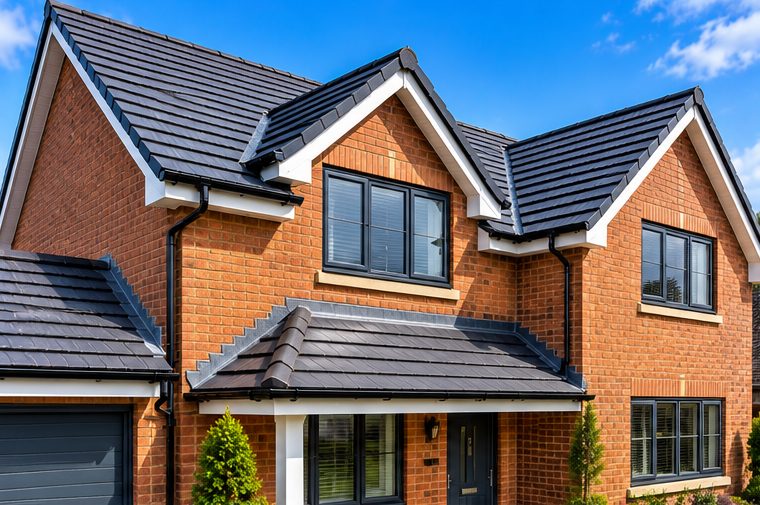
Replacing an entire roof is one of the biggest jobs a homeowner will ever commission, and it is also one of the least understood. The roof disappears for a few days, the house is wrapped in scaffolding, and a week later a different roof is on top. What happens in between decides whether it lasts.
This guide covers Complete Roof Replacement from the owner's point of view, including how to tell whether you truly need it, how the work is sequenced, and what to settle before anyone starts. It is written for homes across Lincolnshire, from older brick houses with timber roofs to newer homes with factory-made trusses, and it avoids product names so you can focus on the decisions that matter.
Patching is sensible when problems are local. Full replacement comes into view when the failures are everywhere. Warning signs include tiles that crumble or flake, widespread slipping, sagging ridge lines, daylight showing in the loft, and a pattern of leaks that move from place to place after each repair. The covering is only one part of it. If the battens are rotten, the underlay has perished or the rafters are damaged, the roof structure needs attention too. A roofer should go into the loft as well as look from outside. Ask to be shown what they see. If you are repeatedly paying for small repairs on an old roof, a replacement may work out sensible in the long run.
Full House Re-Roofing follows a fairly consistent order. First comes scaffolding, which gives safe access and protects the edge of the roof for everyone on site. The old tiles or slates, battens and underlay are then stripped section by section, so the house is never left open for longer than necessary, and sheeting is kept ready in case the weather turns. The structure is inspected, and any damaged timber is repaired or replaced. A new breathable membrane goes on, then fresh battens, and finally the tiles or slates, with ridges, hips, valleys, verges and flashings completed as part of the job. Chimney junctions and roof windows, including a Velux, need proper lead work or flashing kits to keep water out.
The covering affects the look, weight and cost of the roof. Concrete tiles are the common modern choice and suit most pitches. Clay tiles have a traditional character, and natural or imitation slate gives a refined finish. The weight matters, since a heavier covering than the structure was designed for needs checking first. Planning rules may apply for some properties, so ask about that before ordering anything. Matching an existing roof on a terrace or semi can be a visual priority. Think also about ventilation, insulation and whether you want to add or upgrade roof windows while the roof is open, because it is far cheaper to do these now than later.
Sometimes a replacement is not a like-for-like job. New Roof Construction comes into play when you are changing the shape of the roof, adding a dormer, converting a loft, or building an extension, and the structure itself is part of the work. In those cases a new timber frame, trusses or a design from a suitable professional may be required, and building control approval may be needed. Roofers can advise on what is practical, but a structural design for a major alteration should come from someone competent to provide it. Keep that distinction in mind when you compare quotes, so you are comparing the same scope and not a straight tile swap against a rebuild.
Quotes for a whole roof vary because so much depends on the house. The roof area and pitch, the number of hips, valleys and dormers, the covering you choose, and the cost of scaffolding all matter. Access, such as a tight plot or a long walk with materials, adds labour. Repairs to timber, new insulation, ventilation, chimney work and extra roof windows widen the scope. Waste removal and skip hire should be included. Ask whether the price assumes the timbers are sound, and how any extra rotten timber discovered mid-job would be priced, so there are no surprises. Written quotes should list the materials by type.
For a free quotation, contact F H Roofing and tell us about the house, the current covering and what has gone wrong. We cover Lincolnshire, including Lincoln, Boston and Grantham. We will usually want to see the roof from outside and the loft from inside, so we can explain what is needed and why. You will get a written scope you can compare. If a storm has left you with an urgent problem, our 24-hour emergency call-out can help make the roof safe while you decide on the longer-term plan. We will also talk through timing and how the work would be arranged around your household.
For complete roof replacement and full house re-roofing anywhere in Lincolnshire, call or WhatsApp 07561 405402, or use the form below and tell us about the job.
Pictures are for illustration purposes only.
See all New Roof Installations services in Lincolnshire →
It depends on the size of the house, the complexity of the roof, the covering and the weather. A simple roof may take a few days, while a larger or more complicated one takes longer. A roofer should give you an honest estimate after a visit, not a fixed promise.
Almost always, yes. Scaffolding gives safe access, protects people below and supports the strip and re-roof. It is a significant part of the work and usually included in the quote, so check it is listed rather than assumed. It also keeps tools and falling debris away from people.
Most people do. Expect noise, dust in the loft and some disruption outside. A good roofer strips and covers the roof in sections so rain does not get in. It is worth clearing the loft and removing fragile items from walls beforehand.
Tell us about the job and we will be in touch.
Prefer to talk? Call 07561 405402 or WhatsApp us.