Choosing slate for a new roof usually starts with a simple question: where should it come from? The two names that come up most often are Welsh and Spanish, and they are not interchangeable. They differ in appearance, in the way they are sold and graded, and in what suits a particular house.
This guide compares Welsh slate roof installation and Spanish slate roof installation in practical terms. It covers what the roof structure needs to cope with, how slate is fixed, what the scaffolding is for, and what changes the quote. It is general advice for Lincolnshire homeowners rather than a recommendation for your specific property.
Welsh slate is traditionally associated with a rich, deep blue-grey tone and a smooth, fine split, and it is often chosen where a roof needs to look right on an older or period property. Spanish slate is widely used on new work and re-roofs, and generally comes in a darker grey that can look very clean and uniform. Both are natural stone, so there is always some variation between slates. Colour, thickness and surface texture vary from batch to batch, which is why it is worth looking at a sample or at a finished roof nearby before deciding.
Think about the building before the material. A Victorian terrace, a stone cottage and a modern extension all ask different things of a roof. The questions below help narrow things down.
Natural slate is heavy compared with some other coverings, so the roof timbers must be checked before any new slate is ordered. Rafters, purlins and bearings need to be sound, and weak or rotten timber should be repaired or replaced as part of the job. Slates are fixed to treated battens over a breathable membrane, and each one is held with nails or clips suitable for its size and the exposure of the site. In windswept parts of Lincolnshire, fixing specification matters, and extra clips or head-nailing details may be considered. Ridges, hips, valleys and abutments are finished with appropriate trim and flashings.
A full re-roof normally begins with scaffolding around the building, which gives safe access and a platform for storing materials and protects people on the ground. The old covering is stripped, the timber inspected, membrane and battens fitted, and slates are laid course by course from the eaves up. Details such as lead flashings, vents and roof window openings are worked in as the roof progresses. Weather can interrupt the work, so any timing we give is only a guide. The roof is finally checked for loose slates, tidy cuts and clean gutters before the scaffold comes down.
Slate work is priced on roof area, complexity and access. A plain gable roof is quicker to cover than one with hips, valleys, dormers and chimneys. The type and size of slate, the amount of timber repair needed, the choice of ridge and verge details, and the length of time scaffolding stays up all change the figure. Lead work and roof windows add further items. When comparing quotes, check each one lists the same slate, the same underlay and battens, and the same ancillary work, otherwise the totals will not be comparable.
If you are weighing up slate for a new roof, ask F H Roofing for a free quotation. Tell us the address area, the age and type of the house, what covers the roof now and whether you have a preference between Welsh and Spanish. We can talk through the differences, look at the roof and the timbers and put the details in writing. We work around Lincoln, Boston, Sleaford, Grantham, Louth, Skegness, Spalding and Gainsborough.
For welsh and spanish slate roof installation anywhere in Lincolnshire, call or WhatsApp 07561 405402, or use the form below and tell us about the job.
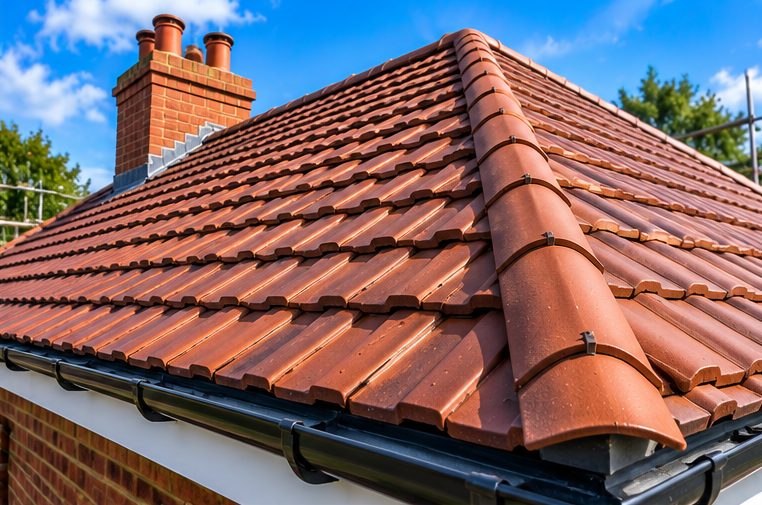
Pictures are for illustration purposes only.
See all New Roof Installations services in Lincolnshire →
Not necessarily. They are different materials with different looks and different supply routes. Welsh slate can suit period houses where a particular appearance matters, while Spanish slate is widely used and suits many homes. The right choice depends on the building, your taste and the planning situation.
For a full re-roof, almost always. Scaffolding provides safe access, a stable working platform and protection around the property. For small repairs, other access methods such as ladders or towers may be enough. We will explain what your job needs when we quote.
Good natural slate can last for a very long time, but the roof as a whole depends on the fixings, battens, membrane and flashings too. These parts may need attention before the slate does. Regular checks after storms will help you catch small problems early.
Tell us about the job and we will be in touch.
Prefer to talk? Call 07561 405402 or WhatsApp us.