A pitched roof is the part of the house that does the most for the least attention, right up until the day it stops. Slipped tiles, sagging lines, water marks on bedroom ceilings and daylight in the loft all suggest the roof is reaching the end of its useful life. Whether you are building new or dealing with an ageing house, the decisions you make now will matter for decades.
This guide covers pitched roof installation for new structures and pitched roof replacement on existing homes. It looks at the signs it is time, the stages of a typical job, scaffolding, materials and extras such as a Velux window, and how quotes are put together. Details vary from house to house, so treat it as general guidance.
A few loose tiles do not mean the whole roof has to come off. Replacement becomes the sensible option when problems are widespread rather than local. Signs include:
The sequence follows a logical order. Scaffolding goes up first, with edge protection and a safe working platform. The old covering is stripped course by course, and the battens and underlay beneath are inspected. Any rotten timber is dealt with, since new tiles on bad battens will not last. New underlay and battens are fitted, followed by the new covering, ridge and hip details, and flashings where the roof meets walls and chimneys. Rainwater goods and fascias are often checked at the same time. We would aim to protect the house during the work, but weather in the Fens and across the county can change quickly, so the sequence adapts to conditions.
Scaffolding is not an optional extra. It protects the people working, keeps materials safe and lets the job be done properly, so expect it to feature in any realistic quote. It does mean a few practical points: it needs clear space around the building, and cars, bins or garden items may need moving. You can usually stay at home, although there will be noise and some dust in the loft. Let us know about neighbours, shared driveways or access constraints early, and tell us about any pets or anything fragile stored in the roof space so it can be protected.
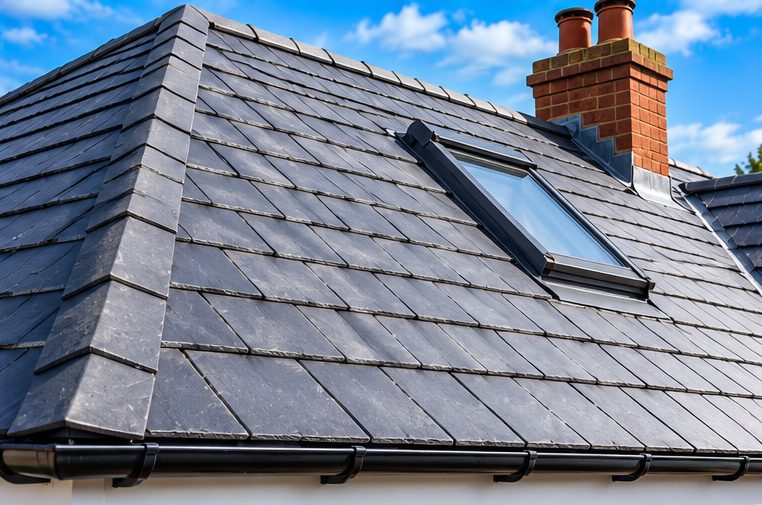
The covering you choose affects the look, the weight on the structure and how the roof ages. Natural slate, clay and concrete tiles each suit different houses, and the existing roof pitch and structure may limit what is suitable. The underlay and ventilation matter too, because a roof space that cannot breathe can suffer from condensation. This is also the moment to think about additions. A Velux roof window can bring light into a loft conversion, and new lead flashings protect chimneys and abutments. Adding these during replacement is usually simpler than returning later to cut into a finished roof.
A pitched roof quote reflects a long list of site-specific factors. The most important are:
F H Roofing is based in Beckingham near Lincoln and covers Lincolnshire, including areas around Lincoln, Grantham, Sleaford and Skegness. Describe the roof, its age if you know it and what has been going wrong. We will visit, check the condition of the covering and, where possible, the structure underneath, then explain whether you need a full replacement or something less. The free quotation will be written so you can see what is included and compare it with others.
For pitched roof installation and replacement anywhere in Lincolnshire, call or WhatsApp 07561 405402, or use the form below and tell us about the job.
Pictures are for illustration purposes only.
See all New Roof Installations services in Lincolnshire →
Yes, in many cases. If one slope has taken the worst of the weather and the rest is sound, replacing it on its own can be reasonable. Matching the existing covering and blending the joins at ridges and hips needs care, so it is worth discussing.
Like-for-like replacement usually does not, but changing the roof shape, height or material, or adding roof windows, may do. Listed buildings and conservation areas have extra rules. Check with your local authority, and building regulations can also apply.
It depends on the size and complexity of the roof, the covering and the weather. A small simple roof will be quicker than a large one with dormers and valleys. We will give you an honest idea after seeing the roof, without promising fixed timescales.
Tell us about the job and we will be in touch.
Prefer to talk? Call 07561 405402 or WhatsApp us.