When a storm strips tiles, lifts a section of flat roof or tears away flashing, the priority is stopping water getting in. Everything else, including the permanent repair, the paperwork and the tidying, comes second. Emergency roof waterproofing is the short-term job of closing the opening and protecting the property until the weather settles and the right repair can be planned.
This guide sets out what to do in the first hour, what temporary measures roofers use and why they are only a stopgap, how to handle the insurer, and what shapes the quote. F H Roofing offers a 24-hour emergency call-out, though we never promise arrival times, because conditions and demand vary.
Safety comes first, and you should never climb onto a wet or damaged roof yourself. Instead, work from inside the house:
The two terms overlap, and in practice they describe one aim: making the building watertight and wind resistant in the short term. Waterproofing focuses on stopping water entry through a hole, a failed joint or damaged covering, while weatherproofing is the wider protection of an exposed area against rain and wind until it is mended. In most cases that means sealing, covering and securing the damaged section rather than rebuilding it. These measures are designed to get you through a few difficult days or weeks, and not to be a lasting fix. A proper repair still follows once conditions allow.
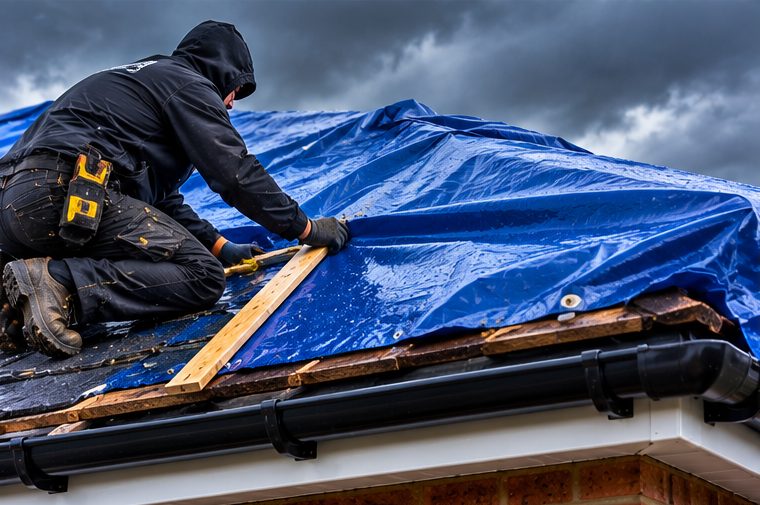
The right measure depends on the roof. On pitched roofs, loose tiles may be refixed or removed and a heavy-duty sheet secured over the opening with battens, so wind cannot get underneath and lift it. Flat roofs with splits can have temporary patches or sealing applied to the damaged area. Broken flashing can be covered or held in place, and open ridges can be sheeted. Sheets need fixing carefully, since a badly secured cover can flap and cause more damage than it prevents. We would also look for hidden damage nearby, such as lifted battens or a displaced chimney, that the first impression might miss.
It is wise to contact your insurer early, before major permanent work starts, so they know what has happened. Take photographs of the damage and the water ingress, and keep any damaged materials if it is safe to do so, as they can help show what failed. Temporary protection is usually sensible to limit further harm. We can talk through what the repair involves and describe the work in plain terms, but we cannot advise on your policy or on how any claim will turn out. Keep receipts and notes of what was done and when, and ask your insurer what documentation they want.
Emergency work is quoted after assessing the situation, and the factors involved are straightforward:
F H Roofing is based in Beckingham near Lincoln and covers Lincolnshire, including areas around Lincoln, Boston, Skegness and Gainsborough. In an emergency, contact us with a short description of what has happened, where the water is coming in and whether anyone is at risk. Our 24-hour emergency call-out is there for urgent situations, though we cannot promise arrival times. Once the property is protected, we can arrange a free quotation for the permanent repair.
For emergency roof waterproofing and weatherproofing anywhere in Lincolnshire, call or WhatsApp 07561 405402, or use the form below and tell us about the job.
Pictures are for illustration purposes only.
See all Storm Damage Repairs services in Lincolnshire →
No. Temporary waterproofing and sheeting are designed to protect the property until the weather improves and a proper repair can be carried out. They should be checked while in place, and the permanent work should be planned rather than left.
We would advise against it. Wet roofs in wind are dangerous, and falls from height are serious. Protect the inside of the house, take photographs from the ground and call a roofer who can work safely with the right access equipment.
You remain responsible for the claim, so contact your insurer yourself. We can talk through the damage and the repair in plain terms and provide a written quotation for the work, but we cannot advise on policies or outcomes.
Tell us about the job and we will be in touch.
Prefer to talk? Call 07561 405402 or WhatsApp us.