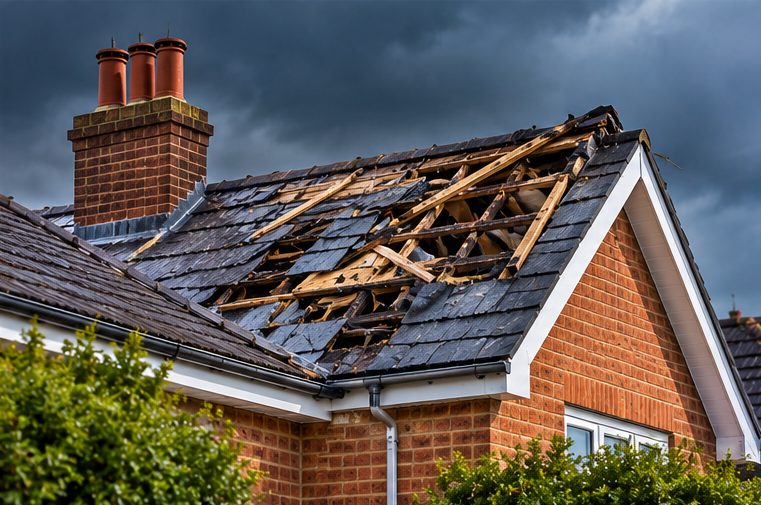
It is usually in the worst weather that a roof starts to leak: a drip on the landing carpet, a brown ring spreading across a bedroom ceiling, water running down a chimney breast. The first priority is to limit damage and stay safe, and the second is to find out where the water is getting in. This guide sets out sensible steps and explains how Emergency Roof Leak Repairs are usually handled.
A leak that appears during a storm may have been developing for months, helped by a slipped tile, tired flashing or a blocked valley. Roof Water Ingress Repairs therefore have two parts: stopping the water now, and fixing the cause properly once the weather settles. Below is a calm checklist for homeowners across Lincolnshire, with notes on insurance, cost factors and how to contact F H Roofing.
Protect the house first. Move furniture and valuables away from the wet area, put a bucket or bowl under any drip, and lay towels or plastic sheeting on the floor. If the ceiling is bulging with trapped water, pierce it carefully at the lowest point with a screwdriver so the water drains into a bucket rather than collapsing in one go, and stand clear while you do it. Switch off the lights and any circuits in the wet area if water is near fittings. If you can safely reach the loft, look for the wet timber or insulation, as that points towards the entry point on the roof.
Water ingress rarely comes from the middle of a healthy tiled slope. These are the places roofers check first.
Wet roofs, wind and ladders are a poor mix, and falls from roofs cause serious injuries every year. Do not climb up to look, and do not attempt to tarp or patch the roof in the dark or in strong wind. You can learn a lot from the ground: use binoculars to look for lifted tiles, a dropped ridge or a displaced flashing. Take photos from a safe position. A roofer with proper access equipment can make a temporary repair, such as securing a tarpaulin or refitting a tile, to stop the worst of the water while a permanent fix is planned.
An emergency visit often has a limited goal: make the roof watertight enough to protect the house. That might mean replacing a few tiles, sealing a flashing temporarily or covering a damaged area. It is not always the final repair, and a good roofer will tell you plainly what is temporary and what still needs doing. A permanent repair follows once the roof is dry enough to work on, and may include renewing flashings, rebedding ridge tiles, clearing valleys or relaying a section. Wet insulation and timbers should be checked and, where needed, replaced, or the damp will carry on.
If the damage looks storm-related, it is wise to contact your insurer early. Take clear dated photos of the damage inside and out from safe positions, and keep any damaged materials such as broken tiles if it is safe to do so. We cannot advise on policies or on how a claim might turn out, but we can talk through what the repair involves, so that you can describe the work accurately. A written quotation that explains what was found and what is being done is useful to have when you speak to the insurer.
The cost of a leak repair depends on the cause, the roof type and height, access and whether scaffolding or a tower is needed, how much material must be replaced, and whether the work is a quick temporary measure or a full repair. Out-of-hours work also changes the picture. F H Roofing offers a 24-hour emergency call-out across Lincolnshire, including around Lincoln, Boston and Skegness, though we cannot promise arrival times. Tell us what you can see, where the water appears and whether it is getting worse, and we will talk through the next step and give a free quotation for the repair.
For emergency roof leak and water ingress repairs anywhere in Lincolnshire, call or WhatsApp 07561 405402, or use the form below and tell us about the job.
Pictures are for illustration purposes only.
See all Storm Damage Repairs services in Lincolnshire →
Not always, but treat it as urgent if water is coming in steadily, a ceiling is sagging, or water is near electrics. A slow drip in dry weather can often wait for a proper inspection, though it should not be left for long.
A roofer can sometimes make a temporary repair in wet weather if conditions are safe, such as sheeting over damage. Permanent work usually needs a drier spell, and nobody should work on a roof in high wind or lightning.
Look in the loft for damp timber, dark stains or dripping points, and use the outside view with binoculars. Water often travels, so the entry point can be some distance from the stain. A roofer will trace it properly.
Tell us about the job and we will be in touch.
Prefer to talk? Call 07561 405402 or WhatsApp us.