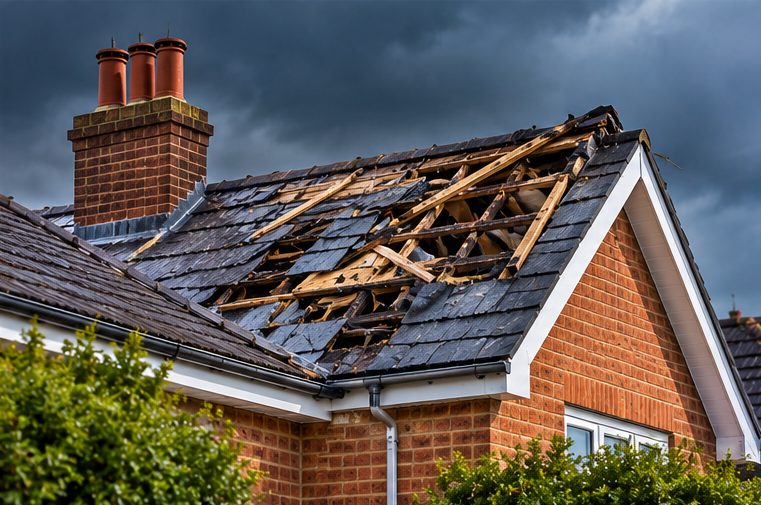
High winds can loosen pots, dislodge flaunching, crack brickwork and tear the lead around a stack. Sometimes the damage is obvious, with bricks on the lawn or a pot in the road. Other times it shows up the next morning as a damp patch on the chimney breast or soot and grit in the fireplace.
This guide is for the first hours and days afterwards. It explains how to keep people safe, what Emergency Chimney Repairs usually involve, how temporary protection differs from a lasting fix, and how to prepare if you plan to contact your insurer. Our 24-hour emergency call-out service exists for situations like this, though we cannot promise arrival times.
Your priority is to keep people away from anything that could fall. Do not go up on the roof, and do not climb a ladder in wind or rain to inspect it yourself. From the ground, look for leaning stacks, missing pots, loose bricks or debris sitting on lower roofs. If material has landed on a path, patio or car, keep family and neighbours clear of the area. Inside the house, keep out of rooms directly beneath a damaged stack if you can, and avoid lighting a fire or stove until the chimney has been checked. If a stack looks ready to come down or someone is at risk, treat it as an emergency and call for help straight away.
Not every chimney problem is urgent, but these usually are:
In an emergency, the first aim is usually to stop further harm. That can mean removing loose masonry that threatens to fall, covering exposed areas with a waterproof sheet, or securing a loose pot. This holds things until the weather clears and proper access is arranged, but it is not a repair. Permanent work follows once the stack can be inspected closely, and may include re-pointing, rebuilding sections, replacing flaunching, refitting pots and renewing lead flashing. Scaffolding is often recommended, since working at height on a damaged stack is safer from a proper platform. A temporary fix may be adequate for a short time only, so ask what is being done and what comes next.
It is wise to contact your insurer early, before major work begins, so they know what has happened. Take clear photos of the damage from the ground and inside the house, and of any debris. Keep damaged materials, such as broken pots or loose bricks, if it is safe to do so. We can talk through what the repair involves and describe the work in plain terms, which can help when you are explaining the situation. We do not advise on policies or claims outcomes, as those are matters between you and your insurer. Keep any paperwork and notes of dates, calls and what you were told.
Emergency work and permanent repairs are priced differently. The extent of the damage is the main driver, from a single pot to a stack that needs taking down and rebuilding. Height, pitch and ease of access matter, and scaffolding adds to the job. Hidden damage, such as water that has soaked into roof timbers or ceilings, may change the scope after the first inspection. Out-of-hours attendance can affect the price of the initial visit. A good roofer separates the make-safe stage from the lasting repair and explains each, so you know what you are agreeing to and can decide on the next stage once the weather has settled.
F H Roofing is based in Beckingham near Lincoln and works across Lincolnshire. We offer a 24-hour emergency call-out service, and free quotations for the repairs that follow. When you get in touch, tell us what you can see, whether water is coming in, and how many storeys the house has. Photos from the ground help us understand what is needed. We will advise on the safest next step and explain the repair options in plain English. We cannot promise arrival times, particularly during widespread bad weather, but we will be honest about what is realistic.
For emergency chimney repairs after storms anywhere in Lincolnshire, call or WhatsApp 07561 405402, or use the form below and tell us about the job.
Pictures are for illustration purposes only.
See all Storm Damage Repairs services in Lincolnshire →
It is safest not to until the chimney has been checked. Damaged flues, loose masonry or blocked pots can let smoke and fumes back into the room. Wait for an inspection before lighting a fire or stove.
If the chimney is dangerous or water is coming in, make it safe first and tell your insurer as soon as you can. Photos and any fallen debris help. We can explain what the repair involves, but we do not advise on claims.
Only for a short while. Temporary protection stops further damage but does not restore the stack. Plan for a proper repair once conditions allow, and ask your roofer what the temporary measure covers and what it leaves unresolved.
Tell us about the job and we will be in touch.
Prefer to talk? Call 07561 405402 or WhatsApp us.