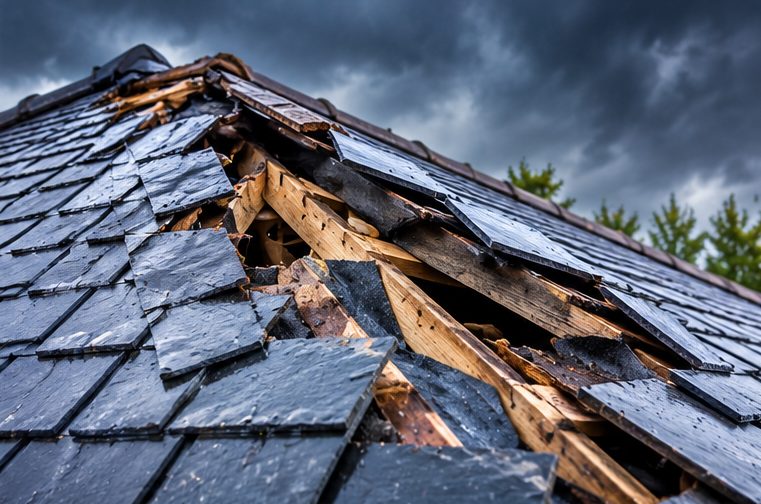
When a gale strips tiles or a branch comes through the roof, the first goal is not a perfect repair but a dry house. Emergency Roof Tarping means covering the damaged area with a heavy-duty waterproof sheet, fixed down properly, so rain stops entering while a proper repair is arranged. It sounds simple, but a badly fixed sheet can flap loose in the next gust and leave you worse off.
This guide explains when tarping is the right move, what Temporary Roof Repairs can and cannot achieve, how to prepare and what to do about your insurer. F H Roofing offers a 24-hour emergency call-out across Lincolnshire, though we never promise arrival times, as these depend on conditions, access and how many people are calling after a storm.
A tarp is a stopgap, and it makes sense when permanent work cannot be done straight away. Common situations are high winds that make working on the roof unsafe, a large opening that needs materials to be ordered, damage that happened in the evening, or a repair that must wait until the surveyor or insurer has seen it. It also suits damage to awkward parts of a roof, such as a hip, valley or the area around a chimney, where a proper repair needs planning. A tarp is not suitable when the structure itself is unsafe, for example if rafters have snapped or part of the roof has dropped. In those cases the first concern is making the area safe and keeping people out of it. A roofer will decide on site whether sheeting is practical.
A sheet thrown over the roof and weighted with bricks is likely to blow off. A proper job starts with clearing loose debris and fragments, then laying the sheet so it runs from above the damage down over it, and extends well past the edges on every side. It is secured with timber battens screwed through the sheet into sound parts of the roof structure, rather than just pinned at the corners. The sheet should be pulled taut with no pockets where water or wind can get under it, and the lower edge should discharge into the gutter or clear of the wall. Where a roof is made of slates or fragile tiles, the sheet is laid carefully to avoid breaking more. Fixings through the covering are kept to a minimum and are made good during the permanent repair.
A tarp is not the only choice. Depending on the damage, Temporary Roof Repairs might include:
While you wait, protect the inside of the house: move belongings, put out buckets, and keep away from ceilings that are sagging. Do not go onto the roof yourself. Take clear photos of the damage inside and out from safe positions, and keep any broken tiles or fallen materials if it is safe to do so, since your insurer may want to see them. It is wise to contact the insurer early to find out what they need. We cannot advise on policies or the outcome of claims, but we are happy to talk through what the repair involves and what we found, so you can describe it accurately. Keep a note of what was done on the day, and ask for the details in writing.
Temporary work is priced on the size of the area to be covered, the height and shape of the roof, how difficult access is, and what has to be done to make it safe. A small hole on a low garage is very different from a large section of a two-storey house with a steep pitch. The time of day can matter, and so can the conditions on the day. Some jobs need scaffolding or a platform, which adds to the effort. It is also worth remembering that a tarp is the first stage of two: the permanent repair is quoted separately once we have seen the full extent, so you can see what each stage is for before agreeing to it.
If water is coming in, call or message using the buttons on this page and say it is an emergency. For permanent repairs after the roof is made safe, the same buttons will get you a free quotation. Please tell us what happened, which part of the house is affected and whether anyone has been on the roof. Photos help. We are based in Beckingham near Lincoln and work across Lincolnshire, including Lincoln, Boston, Sleaford, Grantham, Louth, Skegness, Spalding and Gainsborough. We will be clear about what can be done safely on the day and what should wait for better weather.
For emergency roof tarping and temporary roof repairs anywhere in Lincolnshire, call or WhatsApp 07561 405402, or use the form below and tell us about the job.
Pictures are for illustration purposes only.
See all Storm Damage Repairs services in Lincolnshire →
It depends on the weather, the fixing and the quality of the sheet. A well-secured tarp is intended to be short term, covering you until the permanent repair is done. Long exposure to sun and wind wears it down, so do not leave it up indefinitely and have the repair arranged promptly.
Sometimes, but wet surfaces, wind and darkness make the job riskier. A roofer will judge on arrival whether it is safe. If it is not, the priority may be to limit damage inside the house until conditions improve, rather than putting anyone at risk.
It is wise to contact the insurer early, and photograph everything first. Emergency measures to stop further damage are normally sensible whatever happens, but we cannot advise on policies. Ask your insurer what they need, and we can talk you through what the repair involves.
Tell us about the job and we will be in touch.
Prefer to talk? Call 07561 405402 or WhatsApp us.