Strong wind has a habit of finding the lead on a roof. A flapping strip beside a chimney, a roll of metal hanging at the edge of a dormer or a thin line of daylight along a wall can all mean the waterproofing at that junction has been compromised. The first sign indoors is often a drip or a damp patch after the wind has dropped.
This guide to emergency lead flashing repairs is for Lincolnshire homeowners. It covers what to do straight away, how temporary and permanent repairs differ, how to approach your insurer and what to tell us when you call.
Stay off the roof. Look from the ground, from a window or with binoculars once it is safe and light enough. Note what you can see: lifted or missing lead, bent metal near the chimney, gaps at a wall. Inside, put a bucket under any drip, move furniture and protect electrics. If water is coming through near light fittings, switch the circuit off if you can do so safely. Take dated photos of the damage and of any water marks, because they are useful for the repair and for your records. Clear anything dangerous from beneath the damaged area, such as pieces of loose metal or slates, but never reach out of a window or climb up to inspect it yourself.
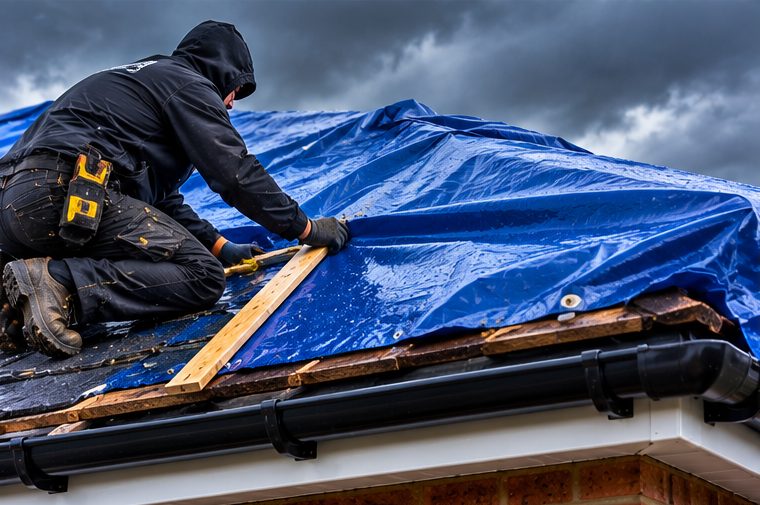
An emergency visit is mainly about stopping water getting in. Depending on what we find, that might mean refixing a lifted section, dressing lead back into its chase, covering an exposed junction with a temporary waterproof layer or sealing a small gap until conditions improve. These are short-term measures. A proper repair usually involves renewing damaged lead, fixing it correctly into the masonry and checking the surrounding covering for disturbance. Sometimes the wind has also shifted tiles or damaged mortar, which needs attention too. We will tell you what has been done and what remains, so the temporary work is not mistaken for the final fix. We offer a 24-hour emergency call-out, though we cannot promise an arrival time.
Wind finds the edges and the exposed corners first. Chimney flashings are common casualties, especially the exposed front apron and the stepped sides. Wall abutments, where lead meets brickwork, can lift if the fixings or pointing are tired. Dormer cheeks, valley linings and porch roofs also suffer. Older lead that has already fatigued or been poorly fixed gives way more easily, which is why a storm sometimes reveals a fault that was already there. In Lincolnshire's open landscape there is often little shelter, so roofs take the full force of a gale. If one section has failed, ask us to check neighbouring lead while we are there.
It is wise to contact your insurer early, before permanent repairs begin, and to keep a record of what happened. Take clear photos of the damage and any water entry, keep damaged materials if it is safe to do so, and keep any receipts for urgent work. We can talk you through what the repair involves and describe the work in plain terms, which many people find helpful when speaking to an insurer. We do not advise on policies or on the outcome of claims, and your insurer will tell you what they need from you. Make sure you understand what is covered before agreeing to a scope of work.
Emergency work is priced on what is needed to make the roof safe and weatherproof. The main factors are how many junctions are affected, how high the damage is and how we can reach it, since scaffolding or a tower may be required for a safe repair. The condition of the masonry and the surrounding covering matters, as does the amount of lead needed for a permanent fix. Working out of normal hours can influence the arrangements. Weather also plays a part, because wet and windy conditions limit what can be done safely. After the roof is secure, we can give a clear quotation for the permanent repair so you can decide at your own pace.
F H Roofing is based in Beckingham near Lincoln and covers Lincolnshire, including Skegness, Louth and Sleaford. Use the phone or WhatsApp buttons on this page. Tell us where the damage is, whether water is entering now, the type of house and what you can see from the ground. Photos are very useful. If it is an emergency, say so at the start. We will talk you through the next steps, arrange a visit as soon as we reasonably can and give a free quotation for any permanent work.
For emergency lead flashing repairs anywhere in Lincolnshire, call or WhatsApp 07561 405402, or use the form below and tell us about the job.
Pictures are for illustration purposes only.
See all Storm Damage Repairs services in Lincolnshire →
It can be. If lead is flapping, lifting or exposing a junction, rain can enter quickly and wind can finish the damage. If water is already coming in, treat it as urgent. Call us, keep clear of the area and protect your belongings.
Yes, in many cases. A section can be refixed, dressed back into place or covered to keep water out until a proper repair is possible. Temporary work should be seen as a stop-gap, and we will explain what a lasting repair would involve.
Contacting them early is wise. Take photos, keep damaged material if safe and keep receipts. We can explain the repair so you can describe it accurately, but we cannot advise on your policy or the result of any claim.
Tell us about the job and we will be in touch.
Prefer to talk? Call 07561 405402 or WhatsApp us.