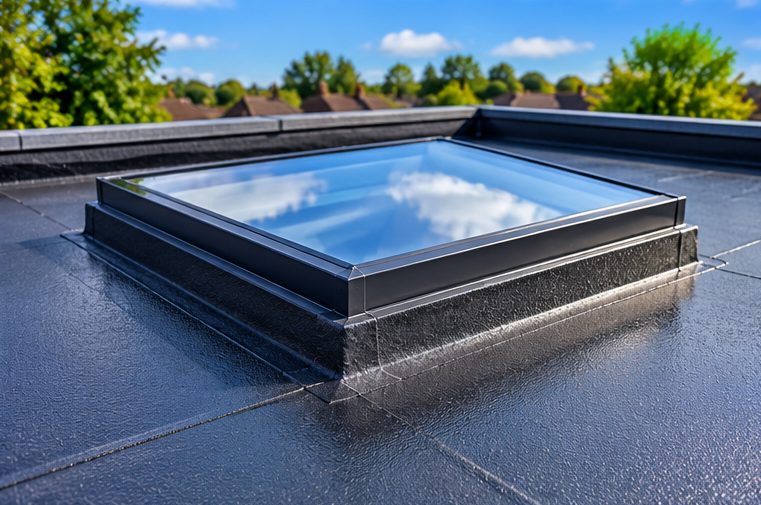
Felt has covered garages, porches, sheds and extensions for generations, and plenty of it is still doing a decent job. It is also one of the first roof coverings people ask about when a ceiling stain appears, because a flat roof that worked for years can suddenly start letting water in after one rough winter. Knowing which route to take saves a lot of frustration.
The real question is rarely whether felt is any good. It is whether the roof you have can be mended sensibly or has reached the point where more patches are just money thrown at it. This guide walks through how felt ages, what Felt Roof Repairs can realistically achieve, what Felt Roof Replacement involves, and how to judge the difference for a home in Lincolnshire.
A modern felt roof is built up in layers of bitumen-based sheet, bonded together to form a waterproof skin. Over time that skin takes a beating. Sunlight dries out the surface, frost opens hairline splits, and the roof moves slightly as the building expands and contracts through the seasons. Standing water is a particular enemy, because ponds sit on the surface for days and find any weakness. Edges and upstands are usually the first places to fail, since that is where the felt is folded, bent and exposed. Blistering, ridging, brittle patches and bare areas where the mineral finish has worn away are all signs of ageing. A roof can look tired and still be sound underneath, which is why a proper look matters before anyone suggests tearing it off.
Repairs suit a roof when the damage is local and the rest of the roof is firm and dry. A split along a joint, a lifted edge, a torn upstand or a worn patch around a vent can often be cut out and patched, then sealed back into the surrounding felt. The cause matters as much as the hole. If a roof ponds because it has no fall, or the drip edge lets water run back under the felt, a patch will fail again. Ask the roofer to explain why it went wrong, not only what they will stick over it.
Repeated leaks in different spots are the clearest message. If you have patched a roof twice and a third problem appears somewhere new, the felt is probably failing as a whole. Other warnings include a spongy feel when walked on, which suggests the boards underneath have taken in moisture, widespread cracking or blistering, and old layers that have lifted away from the deck. Felt Roof Replacement normally means stripping the old covering, checking and repairing the deck, fitting a new vapour or insulation layer where appropriate, and laying a fresh multi-layer system with new edge trims and flashings. Stripping back to the boards is the only way to see what is really there, and replacing rotten timber at that stage prevents a new roof sitting on a bad base.
Felt is a sensible, familiar choice, but it is not the only one. Rubber sheet and fibreglass systems are both common alternatives, and each has strengths. Felt tends to suit roofs with plenty of small details, and repairs are straightforward for any competent roofer. Its downsides are that the surface can crack with age, and that the quality of the result depends heavily on the skill of the person laying it, especially at laps and corners. Rubber is supplied in large sheets with fewer joints, while fibreglass forms a continuous finish but needs a stable, dry deck. None is perfect. A good roofer will talk through the pros and cons for your roof shape, access and budget instead of pushing a single option.
The size of the roof is only part of the picture. Quotes move according to how many layers are on the roof now, whether the old covering must be stripped, how much of the deck needs replacing, and whether insulation is being upgraded. The number of edges, upstands, rooflights and pipes adds time, as does difficult access, such as a roof at the back of a terrace with no side passage. Disposal of the old felt and boards is another factor to ask about. A cheap-looking quote that leaves out deck repairs or edge trims can cost more later. Ask for the scope in writing, including what happens if rotten boards are found once the roof is opened up.
We cover Lincolnshire, including areas around Lincoln, Boston and Grantham, and we are happy to look at felt roofs of all ages. When you get in touch for a free quotation, tell us what the roof covers, whether you have seen drips or only stains, and roughly when it was last worked on. If you can safely photograph the ceiling inside, that helps too. We will tell you honestly whether repair is worth doing or whether a re-cover is the better choice. If water is coming in right now, ask about our 24-hour emergency call-out. It also helps if you can tell us whether the roof is above a living space, as that affects how carefully we look at insulation and ventilation.
For felt roof repairs and replacement anywhere in Lincolnshire, call or WhatsApp 07561 405402, or use the form below and tell us about the job.
Pictures are for illustration purposes only.
See all Flat Roof Repairs services in Lincolnshire →
It depends on how well it was laid, the number of layers, the weather it faces and how much maintenance it has had. A carefully installed multi-layer system can last a good many years, while a poor single-layer job may fail much sooner. A roofer can judge remaining life from a close inspection.
Sometimes, but not always. Over-laying is only sensible when the old covering is firmly bonded and the deck beneath is dry and sound. If the old felt is wet, blistered or lifting, it should be stripped so any damaged boards can be seen and replaced.
Often it is a small split, lifted edge or poor joint that only lets water through when the roof is saturated or ponding. Blocked outlets and gutters can also back water up onto the surface. Clearing drainage first and then inspecting the edges usually finds the cause.
Tell us about the job and we will be in touch.
Prefer to talk? Call 07561 405402 or WhatsApp us.